ISLAMABAD, Dec 12 (Alliance News): Pakistan’s Federal Minister for National Heritage and Culture, Aurangzeb Khan Khichi, issued a stark warning to the international community on Friday, declaring that millennia-old cultural treasures are now at risk of disappearing due to the accelerating impacts of climate change.
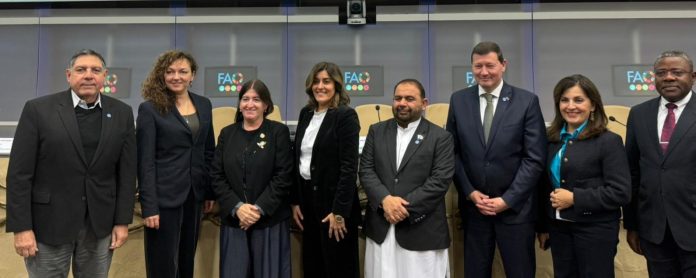
Speaking at a high-level event titled “Culture-Climate Nexus: The Missing Link” on the sidelines of the ICCROM General Assembly in Rome, the minister urged world leaders to take urgent action before humanity’s shared heritage suffers irreversible loss.
Addressing global delegates, Khichi highlighted Pakistan’s vast and diverse cultural landscape—from the ancient Indus Valley sites of Mohenjo-Daro and Harappa to the Buddhist centers of Taxila and Takht-i-Bahi, the Mughal-era Lahore Fort and Shalimar Gardens, and the rich living traditions of indigenous communities.
He emphasized that these cultural treasures, which have survived for thousands of years, now stand on the frontline of a climate crisis they were never meant to endure.
The minister recalled the devastating 2022 floods that inflicted unprecedented damage on Pakistan’s heritage, impacting more than 750 registered sites, including the UNESCO-listed Mohenjo-Daro.
He said these events demonstrated how rapidly escalating climate disasters are threatening irreplaceable historical and archaeological assets.
Khichi further warned of emerging climate risks across Pakistan’s northern and coastal regions.
He noted that glacial lake outburst floods are endangering ancient rock carvings along the Karakoram Highway, while petroglyphs in the Diamer-Bhasha region face erosion and destruction. Coastal heritage sites—including Banbhore and the Makli Necropolis—are under threat from rising sea levels and the gradual encroachment of seawater.
Calling for international solidarity, the minister stressed that cultural heritage must be recognized as a strategic asset within global climate policy.
He urged countries to integrate heritage protection into their Nationally Determined Contributions (NDCs) and National Adaptation Plans (NAPs).
He also recommended establishing a dedicated heritage funding window under the Loss and Damage Fund to support countries struggling with climate-induced cultural losses.
Khichi proposed the creation of an ICCROM-led global knowledge platform that would unite scientists, conservation experts, indigenous communities, and youth.
Such a platform, he said, would foster collaborative, culture-centered solutions to fortify vulnerable heritage sites against climate threats.
The minister also called for culture-based indicators to be incorporated into the UNFCCC Global Stocktake, arguing that the world must measure cultural losses alongside rising temperatures to fully understand the crisis.
Protecting heritage, he added, is not only about safeguarding the past but also about strengthening identity, resilience and community cohesion in the face of growing environmental challenges.
Aurangzeb Khan Khichi is leading Pakistan’s delegation to the ICCROM General Assembly Session in Rome, taking place from December 10–12, 2025, where the country is advocating for stronger global alignment between climate action and cultural preservation.