 https://twitter.com/home https://www.facebook.com/Shabbir.Hussain191
By Shabbir Hussain
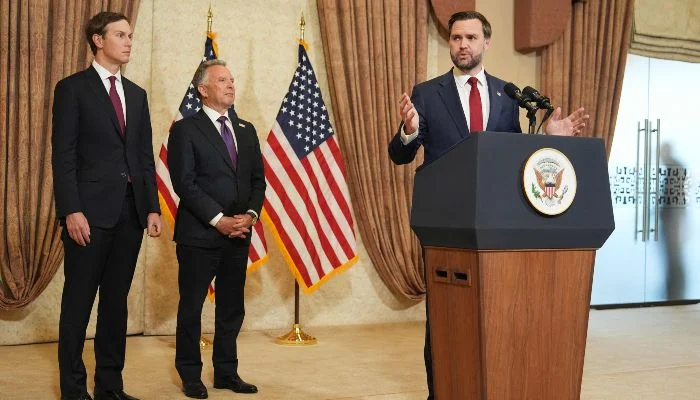
ISLAMABAD, April 11 (Alliance News): High-stakes negotiations between the United States and Iran ended in Islamabad without a breakthrough after 21 hours of intensive discussions, as US Vice President JD Vance said Tehran had declined Washington’s terms despite what he described as a “final and best offer.”
Speaking to the media after the marathon talks, Vance said both sides held “substantive discussions” but failed to resolve key differences, particularly over Iran’s long-term nuclear intentions. He noted that while Washington approached the negotiations with flexibility and in good faith, no agreement could be reached.
“The Iranians have chosen not to accept our terms,” he said, adding that the United States was leaving Islamabad with its “final and best offer” still on the table.
Despite the outcome, Vance praised Pakistan’s role in hosting the talks. He commended Prime Minister Shehbaz Sharif and Chief of Army Staff Asim Munir for their efforts in facilitating dialogue and attempting to bridge differences between the two sides.
“This wasn’t because of the Pakistanis,” Vance remarked. “They did an amazing job and genuinely tried to help both sides find common ground.”
The talks were held at a time of heightened regional tensions and were widely seen as a key opportunity to de-escalate the situation and revive diplomacy between Washington and Tehran. However, fundamental disagreements remained, particularly over Iran’s nuclear programme.
Vance reiterated that the central US demand is a clear and binding commitment from Iran that it will not pursue nuclear weapons or develop capabilities that could lead to rapid weaponisation. He stressed that Washington is seeking long-term assurances rather than a temporary arrangement.
“The key question is whether Iran is willing to make a lasting commitment — not just for now, but for the future,” he said.
He added that a range of issues, including Iran’s frozen assets and broader strategic concerns, were discussed during the talks, but these discussions failed to produce consensus.
Vance also confirmed that US President Donald Trump remained closely involved throughout the process, with the negotiating team maintaining constant communication with him and senior national security officials.
“We were in continuous contact with the president and the national security team,” he said, adding that the delegation had been instructed to negotiate in good faith and make every effort to secure a deal.
The vice president maintained that the absence of an agreement would have greater consequences for Iran than for the United States, arguing that Washington had demonstrated seriousness and flexibility in its approach.
Analysts say the failure to reach an agreement reflects deep-rooted mistrust and significant strategic differences between the two sides, particularly on nuclear and security issues. While diplomatic channels remain open, the outcome highlights the challenges ahead for any future negotiations.
The talks were hosted by Pakistan as part of its broader diplomatic efforts to promote dialogue and reduce regional tensions. Although no deal was reached, officials indicate that engagement between the two sides may continue in the coming days.