 https://twitter.com/home https://www.facebook.com/Shabbir.Hussain191
By Shabbir Hussain
ISLAMABAD, Dec 12(Alliance News): Policymakers, health experts, UN agency representatives, and civil society organisations highlighted the urgent need to strengthen Universal Health Coverage (UHC), social protection systems, and gender-responsive ageing policies to ensure equitable healthcare and income security for all, particularly older women in Pakistan.
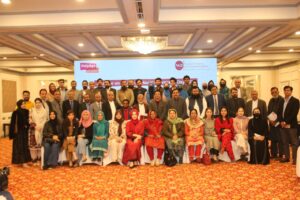
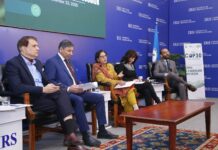
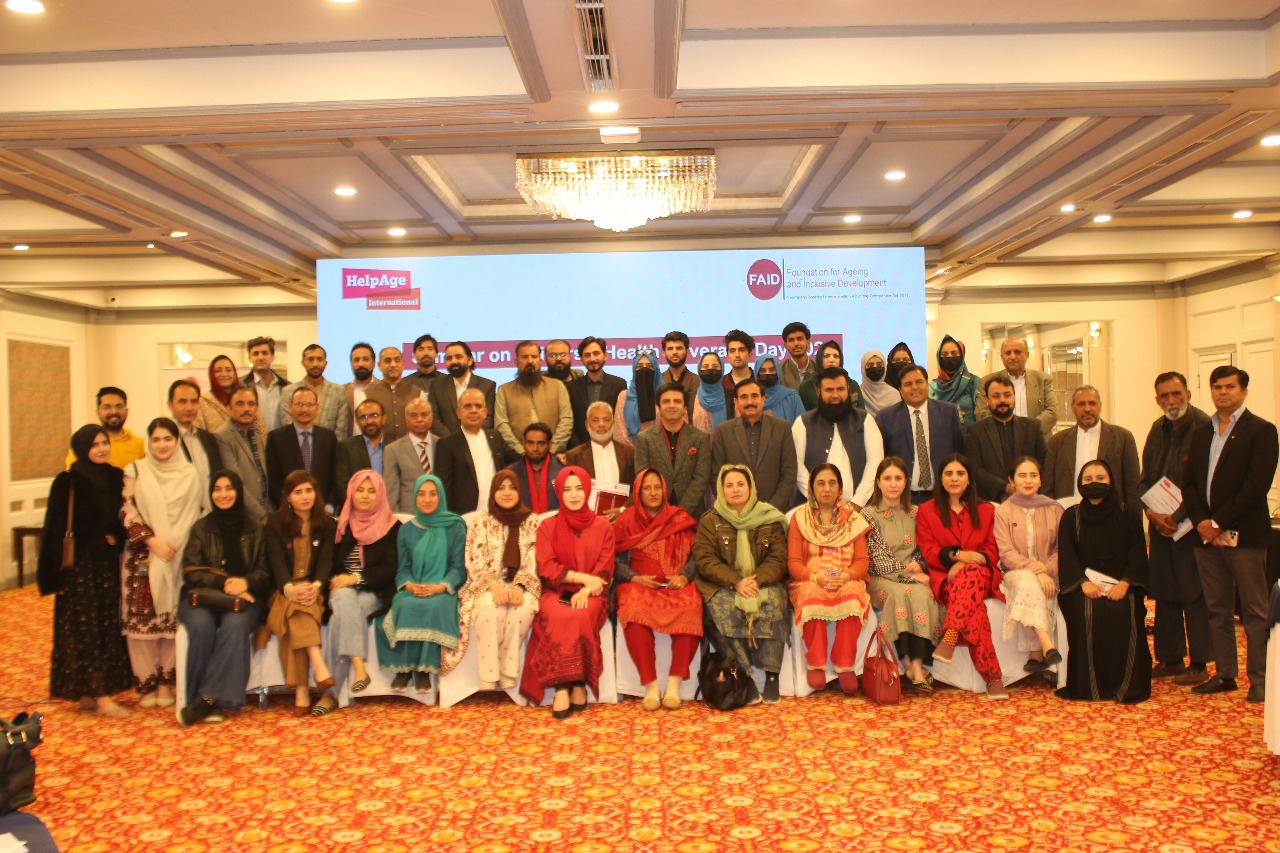
The high-level seminar, organised by the Foundation for Ageing and Inclusive Development (FAID), focused on the intersection of health, social protection, ageing, and gender, addressing systemic gaps affecting elderly populations, especially women.
The CEO of FAID highlighted Pakistan’s national and international commitments to UHC and the UN Decade of Healthy Ageing, underlining that health is a cornerstone of social justice and economic stability.
Achieving UHC requires an integrated approach that aligns health financing, social protection schemes, and ageing frameworks to ensure no one is left behind.
The CEO of the Sehat Sahulat Programme discussed the progress and challenges of Pakistan’s flagship health insurance initiative, emphasising the need to expand coverage for older persons, particularly women without formal employment histories, and to align the programme with pension reforms and broader social protection measures.
Tanzila Siddique, Policy Advocacy and Safeguarding Officer, emphasised that while life expectancy is increasing, health and social protection systems have not kept pace, leaving many older citizens vulnerable.
She stressed the importance of inclusive policymaking that recognises the specific needs of older women, who face compounded challenges due to limited income security, restricted healthcare access, and lifelong gender disparities.
Discussions focused on linking UHC with social protection, exploring pathways to inclusion and addressing gender gaps in healthy ageing.
Policy experts and representatives of the National Commission on the Status of Women highlighted how gender inequalities over the life course result in poorer health outcomes and economic insecurity for older women.
They called for targeted interventions, such as subsidised health services, gender-sensitive health financing, and legal frameworks protecting the rights of elderly women.
Participants stressed involving older women in policymaking to ensure their experiences shape future reforms.
A panel discussion brought together WHO, UNFPA, FAID, and the Ministry of Human Rights to examine collaborative actions for the UN Decade of Healthy Ageing.
Panelists underscored that healthy ageing involves more than medical care—it encompasses dignity, independence, and social inclusion.
Community-based care, age-friendly health services, and sustainable financing mechanisms were highlighted as key priorities.
The discussion also emphasised partnerships between government institutions, UN agencies, and civil society to bridge policy and implementation gaps.
The seminar concluded with a call for an integrated policy framework linking UHC with social protection and ageing strategies.
Recommendations included expanding Sehat Sahulat coverage for older persons, aligning health insurance with pension and social assistance programmes, adopting gender-responsive budgeting, and strengthening data systems to monitor ageing-related indicators.
FAID urged sustained dialogue among stakeholders to ensure health for all ages, describing it as both a moral imperative and a requirement for sustainable development.
The seminar provided a platform for constructive engagement and policy reflection, bringing together policymakers, government institutions, UN agencies, civil society, and technical experts.
FAID reaffirmed its commitment to advocating for inclusive policies prioritising health equity, social protection, and the rights of older women, aiming to strengthen Pakistan’s progress toward inclusive UHC and the goals of the UN Decade of Healthy Ageing.
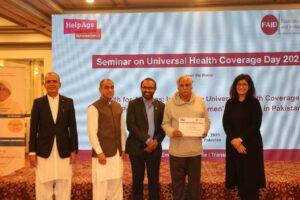
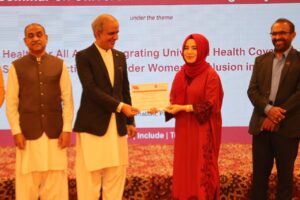
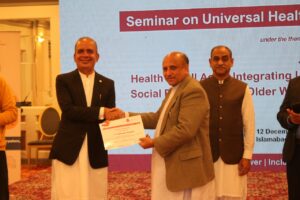
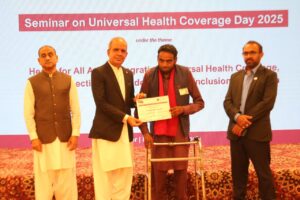
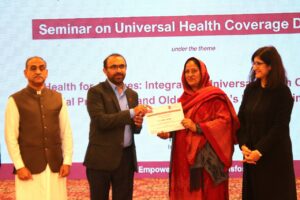
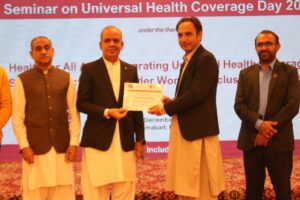
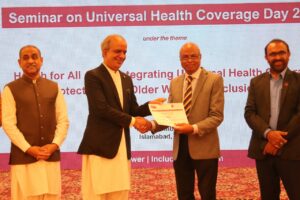
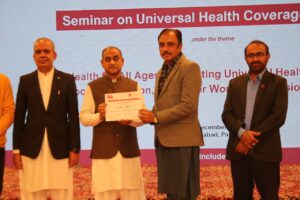
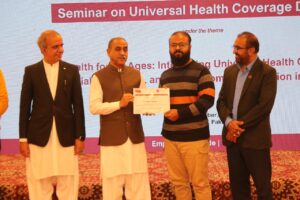
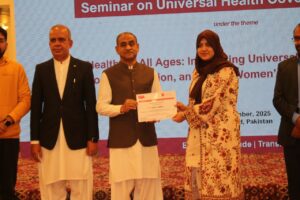
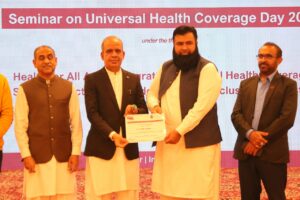
In recognition of their active participation and contributions, all participants of the seminar were presented with shields and participation certificates, symbolising appreciation for their engagement and commitment to advancing inclusive health and social protection policies in Pakistan.