 https://twitter.com/home https://www.facebook.com/Shabbir.Hussain191
By Shabbir Hussain
ISLAMABAD, June 3 (Alliance News): Italy has unveiled expanded opportunities for Pakistani workers and students, announcing a dedicated quota of 10,500 jobs over the next three years and the issuance of more than 3,200 student visas for the 2025-26 academic year, in a move that reflects the growing depth and diversity of relations between the two countries.
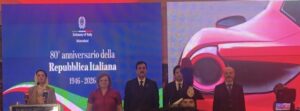
The announcement came as Italy celebrated its National Day and Republic Day in Islamabad, where outgoing Italian Ambassador Marilina Armellin highlighted the steady progress achieved in bilateral cooperation during her tenure.
Addressing diplomats, government officials, business leaders, academics and members of civil society, the ambassador described Pakistan and Italy as trusted partners working together across a broad spectrum of sectors, including migration, education, trade, climate resilience, culture and diplomacy.
Ambassador Armellin said the relationship between the two countries had continued to strengthen in recent years, supported by regular political engagement and expanding people-to-people contacts.
She noted that one of the most visible manifestations of this partnership is the construction of Italy’s new diplomatic compound in Islamabad, which she described as a symbol of Italy’s long-term commitment to Pakistan and a reflection of the enduring friendship between the two nations.
While the new diplomatic facility represents a physical landmark, the ambassador emphasized that the real success of bilateral relations lies in the growing cooperation taking place across multiple sectors.
She identified migration as one of the most important areas of collaboration, noting that Italy hosts the largest Pakistani community in the European Union.
According to the ambassador, both governments have worked extensively to improve consular services, facilitate legal migration and simplify procedures for citizens.
She highlighted the implementation of the bilateral migration memorandum signed last year, which has already begun producing tangible results.
Under the agreement, Italy has reserved a special quota of 10,500 Pakistani workers who will be allowed to enter the country through legal migration channels over the next three years.
The initiative is expected to create new employment opportunities for Pakistanis while helping meet labour market demands in Italy.
She said both countries were committed to ensuring that migration remains safe, orderly and beneficial for workers and employers alike.
To support this objective, Italy has launched specialized pre-departure training programs designed to equip prospective migrants with professional skills, language training and cultural orientation before travelling abroad.
The ambassador described these initiatives as a win-win arrangement that benefits both nations by improving workforce preparedness and promoting legal pathways for migration.
Education, she said, has emerged as another major pillar of cooperation. Italy processed more than 3,200 visas for Pakistani students enrolled in undergraduate, postgraduate and doctoral programs during the 2025-26 academic year, reflecting a growing interest among Pakistani youth in pursuing higher education in Italian institutions.
Ambassador Armellin noted that the increasing number of Pakistani students studying in Italy demonstrates the growing educational and cultural links between the two countries.
These students not only gain access to world-class academic opportunities but also contribute to stronger people-to-people connections and mutual understanding.
On the economic front, the ambassador said there remains considerable untapped potential for expanding trade and investment relations.
She pointed out that recent economic developments in Pakistan have generated fresh interest among Italian companies looking to explore new business opportunities.
This growing confidence, she explained, was evident during a recent conference of ambassadors held in Milan, where several representatives of the Italian business community expressed keen interest in Pakistan and sought meetings to discuss potential partnerships and investments.
She further revealed that several important agreements had been concluded during the past year, particularly in the technology and defence sectors, indicating a growing commercial relationship between the two countries.
Climate change and agriculture have also become important areas of collaboration. Ambassador Armellin observed that Pakistan’s development needs and Italy’s technical expertise complement each other, creating opportunities for meaningful cooperation.
She highlighted ongoing projects aimed at enhancing climate resilience, particularly in Sindh, where communities continue to face the impacts of extreme weather events and environmental challenges.
These initiatives focus on sustainable development, agricultural innovation and community empowerment.
As a practical example of such cooperation, guests attending the event were presented with small bottles of olive oil produced through development initiatives supported by Italy.
The ambassador said the project demonstrates how international cooperation can create sustainable economic opportunities while improving livelihoods in underserved communities.
Cultural diplomacy remains another important component of Pakistan-Italy relations. During her diplomatic assignment, Ambassador Armellin visited all UNESCO World Heritage Sites in Pakistan and said the experience allowed her to gain a deeper appreciation of the country’s rich history, cultural diversity and civilizational heritage.
She reaffirmed Italy’s commitment to supporting Pakistan at UNESCO and promoting greater international recognition of the country’s cultural and historical treasures.
The ambassador also highlighted growing cooperation in scientific research, innovation and academic exchange, which she said are helping strengthen institutional links and encourage knowledge sharing between the two countries.
Turning to political relations, she praised the constructive engagement maintained by Pakistan and Italy on regional and international issues. She particularly acknowledged Pakistan’s efforts in supporting diplomatic initiatives aimed at promoting peace and stability in the Middle East.
According to the ambassador, Italian Prime Minister Giorgia Meloni has publicly supported Pakistan’s diplomatic engagement on key international issues.
She also referred to coverage by a leading Italian newspaper that described Pakistan’s growing diplomatic significance using the Latin phrase “Islamabada Caput Mundi,” meaning “Islamabad, Capital of the World.”
Reflecting on the significance of Italy’s Republic Day celebrations, Ambassador Armellin recalled that Italians voted to establish a republic eighty years ago, a historic moment that also marked the first time women in Italy were granted the right to vote.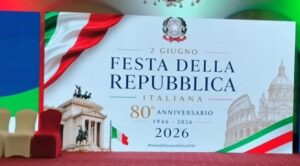
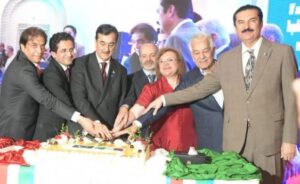
The event in Islamabad was attended by Chairman Senate Syed Yousaf Raza Gillani, Minister for Petroleum Ali Pervaiz Malik, senior government officials, diplomats and representatives of the business community.
An exhibition organized alongside the celebrations paid tribute to women who contributed to the shaping of modern Italy.
Guests also viewed artwork by Federica Fontana, an Italian artist who has made Pakistan her home and whose work reflects the cultural connections between the two countries.
Concluding her remarks partly in Urdu, Ambassador Armellin said she was leaving Pakistan with a profound sense of gratitude and optimism.
While acknowledging that significant work remains ahead, she expressed confidence that the foundations of friendship, trust and cooperation established over the years would continue to support stronger relations between Pakistan and Italy.
She said the achievements made in recent years demonstrate the potential of the bilateral partnership and provide a solid basis for future collaboration in education, migration, trade, climate action, culture and diplomacy.