ISLAMABAD, Feb 14 (Alliance News): Pakistan and UN-Habitat on Saturday agreed on strategic measures to transform the country’s rapidly growing cities into climate-resilient and economically sustainable urban centers, with a renewed focus on developing an action-oriented National Urban Strategy.
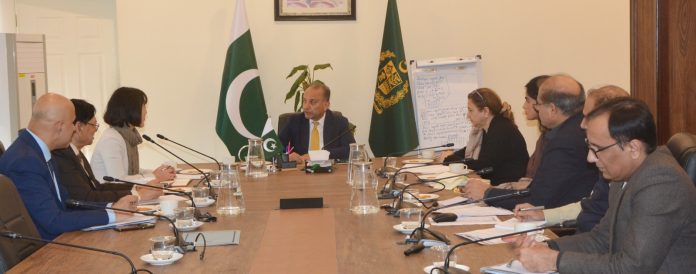
The understanding was reached during a meeting between Federal Minister for Climate Change and Environmental Coordination Musadik Masood Malik and a UN-Habitat delegation led by its Asia-Pacific Regional Director Kazuko Ishigaki.
The discussion focused on strengthening cooperation in climate-resilient urban development, including sustainable housing, improved land management, and upgrading informal settlements.
Both sides stressed the urgency of preparing Pakistan’s cities to withstand floods, droughts, and heatwaves while ensuring long-term economic growth.
Ishigaki briefed the minister on UN-Habitat’s Strategic Plan 2026–2029, which prioritizes housing, land access, and essential services, while integrating climate adaptation and resilience into urban systems.
She reaffirmed UN-Habitat’s commitment to support Pakistan in tackling urban flooding, drought risks, and other climate challenges. She also highlighted the importance of Pakistan’s participation in the 13th World Urban Forum (WUF-13), scheduled in Baku from May 17 to 22, 2026, as a platform to showcase national resilience initiatives and attract global investment.
Minister Malik outlined key urban challenges, including rapid urbanization, heat island effects, poor drainage and sewerage infrastructure, water contamination, encroachments, housing shortages, and weak zoning enforcement.
He emphasized that fragmented planning and weak urban design have worsened these issues and called for a context-specific, implementable National Urban Strategy backed by institutional reforms.
Officials noted that Pakistan has already initiated steps to operationalize the strategy under the Adaptation Fund.
Both sides agreed to enhance coordination among federal, provincial, and local governments, as well as development partners and the private sector, to promote green infrastructure, innovation, and sustainable urban development across the country.