ISLAMABAD, Dec 24 (Alliance News): The federal cabinet, chaired by Prime Minister Muhammad Shehbaz Sharif, on Tuesday approved key decisions related to the privatisation of Pakistan International Airlines (PIA) and reiterated the government’s firm commitment to transparency, political dialogue and economic reform.
A special meeting of the cabinet was held at the Prime Minister’s House, during which it formally endorsed the decisions taken earlier by the Cabinet Committee on Privatisation regarding PIA. The cabinet also offered prayers for the smooth and successful completion of all stages of the privatisation process, according to a Prime Minister’s Office statement.
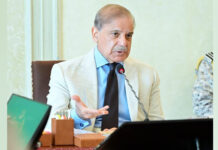
Addressing the meeting, Prime Minister Shehbaz Sharif said the PIA privatisation would be conducted in a transparent, credible and reliable manner. He noted that the bidding process would be broadcast live on television, with sealed bids placed in see-through boxes and opened only after price determination. The award, he said, would be made through a competitive process to the highest bidder.
Describing the transaction as one of the largest financial undertakings in Pakistan’s history, the prime minister stressed that the entire process must inspire public and investor confidence. He said the final outcome of the bidding would be presented to the cabinet for approval and urged ministers to actively participate to ensure decisions were taken with collective wisdom.
The prime minister appreciated the efforts of the relevant ministries and cabinet members in advancing the privatisation agenda, particularly commending the roles of the deputy prime minister, defence minister and finance minister. He termed the day significant for PIA’s future and expressed confidence that a transparent process would strengthen economic management and private-sector trust.
Reaffirming the government’s stance on political engagement, Prime Minister Shehbaz said the government remained committed to peaceful dialogue with all political parties for national development, prosperity and harmony. However, he made it clear that any attempt to disrupt law and order in the name of dialogue would not be tolerated, stressing that dialogue must be based on constitutional principles and legitimate demands.
During the meeting, the prime minister congratulated the nation on Pakistan’s victory in the Under-19 cricket championship, calling it a proud moment for the country. He also referred to the conferment of the King Abdulaziz Award on Pakistan’s field marshal in Saudi Arabia, saying the honour reflected the dignity of the entire nation.
In addition to PIA-related matters, the cabinet approved several policy and legislative measures. On the recommendation of the Petroleum Division, it approved the extension of the Off-Grid Power Plants Levy Act 2025 to include the sale of gas to captive power plants by third parties.
To modernise public procurement, the cabinet granted principled approval for amendments to the Public Procurement Regulatory Authority (PPRA) Ordinance 2002, aimed at aligning procurement procedures with contemporary requirements. It also approved the repeal of the National University for Security Sciences Islamabad Bill 2025 and constituted a committee to ensure effective consultation on private members’ bills in the National Assembly.
The cabinet further approved the National Cannabis Control and Regulatory Policy 2025 to promote regulated use of plant-based resources in the pharmaceutical and textile sectors. On the recommendation of the Ministry of Interior, it also approved a visa clearance system to facilitate Pakistani citizens travelling abroad through a transparent and secure mechanism.
The cabinet ratified decisions taken by the Cabinet Committee on Legislative Cases in its meetings held on October 20, November 5 and November 21, 2025, as well as decisions of the Economic Coordination Committee taken on December 18, 2025.
Concluding the meeting, Prime Minister Shehbaz Sharif reaffirmed that national interest would remain the guiding principle of the government’s decisions, particularly in matters of economic reform, political stability and public confidence.