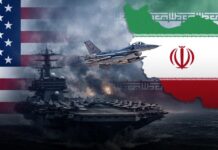
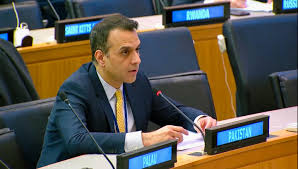
UNITED NATIONS, Dec 24 (Alliance News): Pakistan has called for renewed diplomatic engagement and stressed the imperative of avoiding confrontation to resolve the Iran nuclear issue, as deep divisions persisted within the United Nations Security Council over the way forward.
Speaking during a Security Council debate on nuclear non-proliferation, Pakistan’s Deputy Permanent Representative to the UN, Ambassador Usman Jadoon, said it was “deeply regrettable” that divisions within the Council and beyond had widened in recent months, pushing the issue further away from a constructive resolution.
He noted that the situation had been further complicated by unilateral actions involving the use of force, violations of the UN Charter, and differing interpretations regarding the invocation of the so-called snapback mechanism.
At the core of the current divide, he said, was a dispute over the legitimacy of Security Council meetings related to the 2015 Iran nuclear deal, formally known as the Joint Comprehensive Plan of Action (JCPOA).
The JCPOA, signed by Iran along with China, France, Russia, the United Kingdom, the United States, Germany and the European Union, aimed to limit Iran’s nuclear programme in exchange for sanctions relief. However, the agreement was severely undermined after the United States withdrew from it in 2018 and reimposed sanctions.
Ambassador Jadoon cautioned that coercive measures would not bring parties closer but would instead deepen mistrust.
He underlined that sanctions disproportionately affect ordinary people and hinder economic development, adding that Pakistan firmly believes diplomacy and dialogue must remain the guiding principles for resolving all outstanding issues related to Iran’s nuclear programme, in line with the rights and obligations of all concerned parties.
Reaffirming Pakistan’s consistent position, he said Islamabad has always advocated diplomatic engagement and the avoidance of confrontation and conflict.
He maintained that the JCPOA had provided an essential framework grounded in international law, mutual respect and acceptance, and argued that its core principles could still be useful if there is genuine willingness among parties to move forward in a spirit of compromise.
Calling for the revival of the JCPOA’s original spirit, Ambassador Jadoon said existing divisions could be bridged by bringing all parties together through a conciliatory, solution-oriented approach.
He emphasised that trust and confidence in diplomacy, which have been damaged in recent months, must be carefully restored.
He also underscored the critical role of the International Atomic Energy Agency (IAEA), stressing that the Agency must objectively fulfil its mandate of verifying compliance with nuclear safeguards obligations.
Constructive efforts, including through the Security Council, should be undertaken to bring all parties towards a compromise acceptable to all, he added.
Earlier, UN Under-Secretary-General for Political and Peacebuilding Affairs Rosemary DiCarlo told the Council that despite intensified diplomatic efforts during the second half of 2025, no agreement had been reached on the future of Iran’s nuclear programme.
She reiterated that a negotiated settlement remained the best option to ensure the peaceful nature of Iran’s nuclear activities while providing sanctions relief.
The meeting marked the first Security Council session since France, Germany and the United Kingdom triggered the snapback mechanism, citing Iran’s alleged non-compliance with the JCPOA.
Western members, including the United States, United Kingdom and France, argued that the resolution underpinning the nuclear deal remained in force and that Iran’s actions posed a serious threat to international peace and security.
France’s Deputy Permanent Representative Jay Dharmadhikari claimed that Iran’s nuclear stockpile, if enriched to military levels, could be sufficient to produce multiple nuclear weapons.
In contrast, Russia’s Ambassador Vassily Nebenzia criticised the Council presidency for convening a meeting on what he described as a “non-existent agenda item,” arguing that the JCPOA framework no longer existed.
Iran’s Ambassador Amir-Saeid Iravani asserted that UN Security Council Resolution 2231 expired on October 18, 2025, and therefore had no remaining legal effect.
He rejected the legitimacy of the meeting, accusing certain members of distorting the resolution and spreading disinformation about Iran’s nuclear programme.