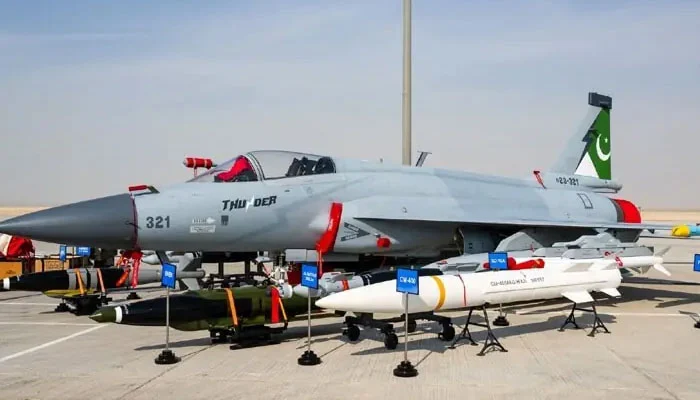
MOGADISHU, Feb 22 (Alliance News): Somalia is negotiating with Pakistan to purchase up to 24 JF-17 Thunder Block III fighter aircraft, in what could become the country’s most ambitious step since 1991 to rebuild an independent air combat capability and secure its airspace and coastline, foreign media reported on Sunday.
The discussions gained momentum after Somali Air Force Commander Mohamud Sheikh Ali visited Islamabad in February 2026, highlighting Mogadishu’s urgency to restore a fixed-wing combat force that collapsed following decades of political instability.
“Our airspace must be protected by Somali hands,” a Somali defence ministry official said, describing the planned acquisition as both a strategic and symbolic move toward national sovereignty and institutional revival.
In the Horn of Africa, where air superiority plays a decisive role in counterterrorism, territorial security and protection of maritime trade routes, Somalia views the development of its air force as central to long-term stability.
Pakistan’s Minister for Defence Production Raza Hayat Harraj said the JF-17 platform offers a cost-effective alternative to Western fighter jets, which are often priced at more than three times the cost of a single JF-17 unit estimated between $30 million and $40 million.
Security analysts in Islamabad note that the JF-17’s appeal lies in its overall operational package, including training, maintenance support, weapons integration and fewer political restrictions compared to Western platforms—factors that make it attractive to countries seeking defence autonomy.
Former Pakistan Air Force air commodore Adil Sultan said the aircraft’s operational record and performance in high-intensity scenarios have strengthened its credibility among international buyers, adding that it has proven effective against more expensive Western and Russian systems.
If finalised, the deal—estimated at around $900 million—would mark Somalia’s largest defence procurement since the Cold War era. Analysts say the acquisition could significantly enhance Somalia’s ability to patrol its vast coastline, counter militant threats and reduce reliance on foreign airpower support.
Beyond military modernisation, the potential purchase is expected to alter the security dynamics of the Horn of Africa by enabling Somalia to assert sovereign control over its airspace and strengthen national defence institutions after decades of fragility.