 https://twitter.com/home https://www.facebook.com/Shabbir.Hussain191
By Shabbir Hussain
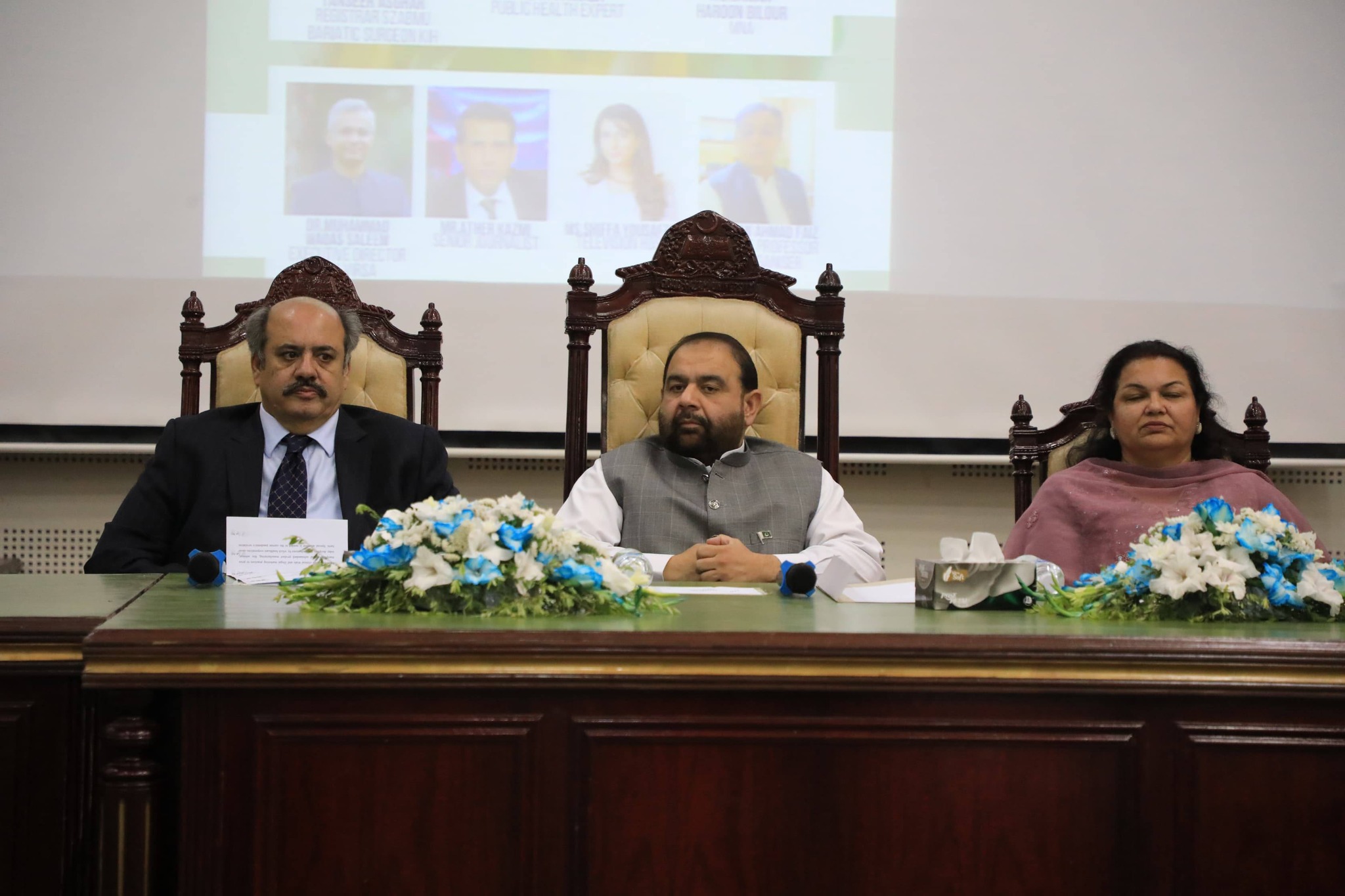
ISLAMABAD, May 9 (Alliance News): The School of Sociology at Quaid-i-Azam University organized a one-day national seminar on “Ethical Pharmaceutical Practices,” bringing together policymakers, academics, healthcare experts, parliamentarians, and media professionals to discuss the growing need for transparency, accountability, and ethical standards in Pakistan’s healthcare and pharmaceutical sectors.
The seminar served as an important platform for dialogue on public health challenges, responsible pharmaceutical regulation, ethical medical practices, and the role of institutions in ensuring safe and equitable healthcare services for citizens.
Federal Minister for National Heritage and Culture Aurangzeb Khan Khichi attended the seminar as the chief guest and underscored the importance of strengthening ethical standards across healthcare institutions and pharmaceutical industries.
Addressing participants, he said ethical healthcare practices are essential for building public trust and improving the overall quality of life in society.
He emphasized that healthcare should not merely be viewed as a commercial sector but as a fundamental public service requiring integrity, accountability, and social responsibility.
He said the government remains committed to supporting initiatives aimed at improving healthcare governance, ensuring transparency in pharmaceutical regulation, and promoting public awareness regarding safe medical practices.
Vice Chancellor of Quaid-i-Azam University Prof. Dr. Zafar Nawaz Jaspal highlighted the role of academic institutions in addressing contemporary social and health-related issues through research, dialogue, and policy engagement.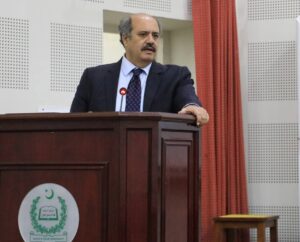
He said universities must serve as centers of intellectual and social development by encouraging critical discussions on ethical concerns affecting society.
Prof. Jaspal noted that the pharmaceutical sector directly impacts millions of lives, making ethical conduct and responsible regulation critically important.
He stressed the need for stronger collaboration between academia, healthcare professionals, regulatory authorities, and policymakers to address challenges related to public health and medicine distribution.
Public health expert Dr. Zafar Mirza delivered a comprehensive address on healthcare reforms and ethical responsibilities within the pharmaceutical industry.
He pointed out that access to affordable and quality healthcare remains one of the most pressing challenges facing developing countries, including Pakistan.
Dr. Mirza stressed the importance of ensuring transparency in drug manufacturing, pricing, marketing, and prescription practices. He said unethical pharmaceutical practices not only undermine public confidence but also place vulnerable communities at risk.
He further emphasized that strengthening regulatory mechanisms and improving institutional accountability are essential for protecting public health.

He also highlighted the need for evidence-based policymaking and investment in preventive healthcare systems, stating that ethical healthcare frameworks are fundamental to achieving sustainable public health outcomes.
Dr. Syed Tanseer Asghar discussed the responsibilities of healthcare practitioners and pharmaceutical companies in maintaining professional ethics and prioritizing patient welfare.
He stressed that healthcare providers must adhere to high ethical standards while ensuring that medical decisions are guided by patient needs rather than commercial interests.
Member of the National Assembly Samar Haroon Bilour addressed the seminar by emphasizing the need for legislative and institutional reforms to improve healthcare accessibility and accountability in Pakistan.
She said ethical healthcare systems are closely linked with social justice and public welfare.
Bilour noted that women, children, and economically marginalized communities are often the most affected by gaps in healthcare delivery and pharmaceutical regulation.
She stressed that policymakers must work collectively to create a healthcare system that prioritizes affordability, safety, and equal access for all citizens.
Senior journalist Ather Kazmi highlighted the role of media in promoting awareness about healthcare ethics and exposing irregularities within the pharmaceutical and healthcare sectors.
He said responsible journalism plays a critical role in informing the public, strengthening accountability, and encouraging policy reforms.
Kazmi stressed that media organizations must maintain ethical reporting standards while covering sensitive health-related issues.

He added that accurate and responsible reporting can contribute significantly to public education and improved healthcare awareness.
Journalist and media personality Shifa Yousafzai also shared her views on media ethics and the social responsibility of communication platforms in addressing public health challenges.
She emphasized the importance of factual reporting and constructive public discourse in combating misinformation related to healthcare and pharmaceuticals.
Participants at the seminar engaged in discussions on a range of issues including counterfeit medicines, unethical marketing strategies, patient rights, healthcare accessibility, and the impact of misinformation on public health.
Speakers collectively stressed that ethical pharmaceutical practices require coordinated efforts among government institutions, healthcare professionals, educational institutions, civil society, and media organizations.
The seminar highlighted the urgent need for stronger pharmaceutical oversight, improved regulatory frameworks, and enhanced public awareness campaigns to ensure patient safety and healthcare integrity across the country.
The event concluded with an interactive session where participants exchanged ideas and recommendations aimed at strengthening ethical standards within Pakistan’s healthcare system.
Organizers expressed hope that the discussions would contribute toward policy reforms and encourage continued collaboration among stakeholders working in the fields of public health and pharmaceutical governance.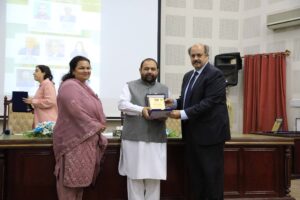
At the conclusion of the seminar, commemorative shields were presented to the distinguished guests in recognition of their valuable contributions and participation in promoting dialogue on ethical healthcare and pharmaceutical responsibility.
The successful organization of the seminar reflected Quaid-i-Azam University’s commitment to fostering intellectual discourse on critical national issues and promoting collaborative efforts to build a healthier, more ethical, and socially responsible society.