
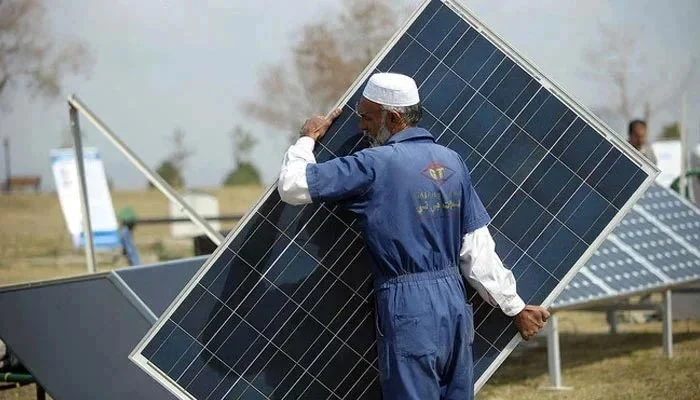
ISLAMABAD, July 11, 2026 (Alliance News): Pakistan has become the world’s third-largest importer of solar panels after importing 17 gigawatts (GW) of solar power systems in 2024, according to the Pakistan Climate Prosperity Plan (CPP) jointly prepared by the Ministry of Finance and the Ministry of Climate Change.
The report states that solar imports doubled compared to the previous year, driven by rising electricity tariffs and falling global solar panel prices.
It recommends a comprehensive strategy to address the country’s energy sector challenges, including restructuring high-cost power purchase agreements (PPAs), introducing cost-reflective tariffs and gradually retiring inefficient fossil fuel power plants.
According to the report, Pakistan aims to achieve a 60% clean energy share by 2030, generate 50% of its electricity from renewable sources by 2035, and increase renewable energy’s share to 95% by 2040.
The plan also proposes phasing out or converting 14,000MW of fossil fuel-based power plants by 2035, reducing transmission and distribution losses from 19% to 8%, and installing rooftop solar systems in all government secondary schools by 2035.
The report notes that dependence on imported fossil fuels, volatile global energy prices and currency fluctuations have increased electricity generation costs and contributed to the country’s growing circular debt.
It stresses that expanding solar, wind, hydro and biomass energy, alongside investments in grid modernisation and energy storage, would improve energy security, reduce emissions, lower electricity costs and ease pressure on Pakistan’s foreign exchange reserves.
The report also recommends transparent auctions for renewable energy projects and stronger credit guarantees to attract private investment in the country’s clean energy sector.