ISLAMABAD, Aug 16 (Alliance News): Muttahida Qaumi Movement-Pakistan (MQM-P) Chairman Khalid Maqbool Siddiqui has called for a national dialogue to develop a consensus-based framework for the creation of new provinces, arguing that Pakistan’s existing administrative structure is no longer adequate to meet the country’s growing population and governance needs.
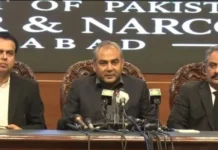
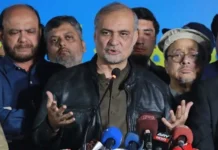
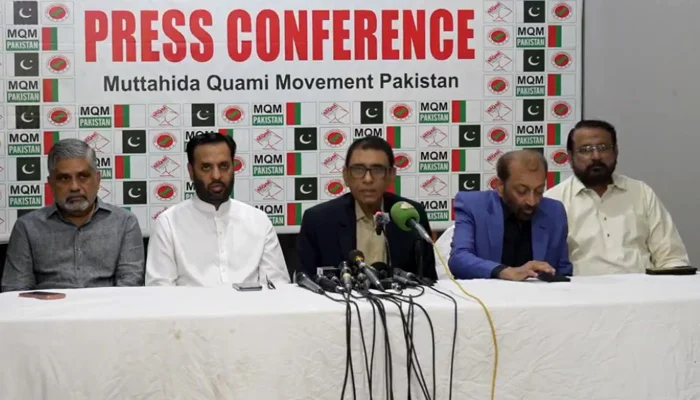
Addressing a press conference in Karachi alongside senior party leaders Dr Farooq Sattar and Mustafa Kamal on Sunday, Siddiqui said the debate over new provinces should be treated as a national administrative and governance issue rather than a partisan or ethnic matter.
He urged political parties and other stakeholders to rise above political differences and hold an inclusive dialogue to determine where new administrative units were required and how they could be established through the constitutional process.
Siddiqui said Pakistan’s administrative boundaries had largely developed around linguistic considerations, while the country’s population had increased substantially over the decades.
He questioned why successive governments had continued creating new districts but had avoided a broader discussion on restructuring provinces despite growing administrative pressures.
According to the MQM-P chairman, the consequences of maintaining the existing provincial structure should also be examined, particularly in terms of governance, public service delivery and political representation.
He said Sindh was among the regions where the demand for additional administrative units was particularly strong.
Siddiqui rejected the argument that advocating the creation of new provinces amounted to disloyalty or posed a threat to national unity. He pointed out that the Constitution itself provides a legal mechanism for creating new provinces.
“If it is considered an act of disloyalty, then why does the Constitution provide for it?” he questioned.
Referring to the 18th Constitutional Amendment, Siddiqui said MQM-P had supported greater provincial autonomy and decentralisation, but argued that decentralisation alone could not deliver its intended benefits without an effective administrative structure capable of reaching citizens.
He said MQM-P had already introduced a constitutional bill relating to the creation of new provinces, which remained before a parliamentary standing committee.
The party, he added, had previously sought judicial intervention when progress on the issue remained stalled and could again approach the Supreme Court if constitutional and legal obligations were not fulfilled.
Mustafa Kamal said the proposal for new administrative units was not directed against any ethnic or linguistic community, including Sindhis.
He argued that additional provinces could bring government closer to citizens, improve representation and strengthen accountability and public service delivery.
Dr Farooq Sattar also supported the proposal, saying the establishment of additional administrative units had become increasingly important for Pakistan’s stability and cohesion.
He said bringing governance closer to the population could increase public participation, improve service delivery and enable local leadership to better represent the communities it served.
Political reaction
The proposal has triggered mixed reactions among political parties.
The Pakistan Peoples Party (PPP), which governs Sindh and remains an important coalition partner of the Pakistan Muslim League-Nawaz (PML-N), has opposed the creation of new provinces.
Federal ministers and senior government figures have also not endorsed the proposal.
Interior Minister Mohsin Naqvi, who last month described Pakistan’s governance structure as requiring significant restructuring, later clarified his position, saying the existing system would continue and complete its constitutional term.
Naqvi explained that his remarks about a “collapsed” governance structure referred to the gradual weakening of administrative and institutional capacity over several decades rather than criticism of the present government.
Prime Minister’s Adviser on Political Affairs Rana Sanaullah also said the government had not formulated any plan to create new provinces.
Speaking on Geo News programme Naya Pakistan, Sanaullah said different proposals were being discussed publicly, with some suggesting 12 provinces, others 20 and some even more.
He said the proposal put forward by MQM-P and Mustafa Kamal was primarily focused on Karachi and maintained that the PML-N leadership had not recently held any formal discussion on the creation of new provinces.
Sanaullah also questioned whether there was sufficient public support for widespread provincial reorganisation, saying that apart from the demand for a Hazara province, there was limited evidence of broad-based grassroots movements for new provinces in other parts of the country.
The proposal has nevertheless received support from some political figures.
Istehkam-e-Pakistan Party (IPP) President Abdul Aleem Khan backed the idea, describing the creation of new provinces as a national issue that should not be sacrificed for political considerations.
He specifically supported demands for South Punjab and Bahawalpur provinces, saying calls for additional administrative units had emerged from different parts of Pakistan.
Pakistan Tehreek-e-Insaf (PTI) Chairman Barrister Gohar Ali Khan has also expressed support for creating additional administrative units.
However, he stressed that any decision should be based on broad political consensus and implemented strictly through the constitutional process, including the required two-thirds majority in the relevant assemblies.
The renewed debate has brought Pakistan’s long-standing question of provincial restructuring back into the national political discourse, with supporters arguing that smaller administrative units could improve governance and representation, while opponents remain concerned about political, financial and constitutional implications.