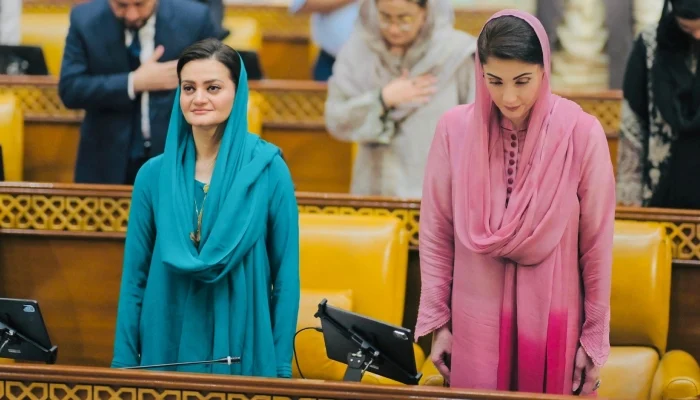
ISLAMABAD, Sep 12 (Alliance News): Senior Punjab Minister Marriyum Aurangzeb on Saturday defended Chief Minister Maryam Nawaz against criticism over her use of a government jet for a private London visit and her remarks about terrorism, accusing opponents of twisting her statement to fuel hatred and division.
In a post on X, Marriyum said the issue was not the aircraft or Maryam’s remarks but her performance and growing popularity.
“These days, the issue is not with the plane trouble or Maryam Nawaz’s statement; the real trouble is with Maryam Nawaz’s performance and her rising popularity,” she said.
Maryam has faced criticism over the alleged use of a government jet for her London visit last week, following the graduation of her youngest daughter, Mahnoor Safdar, from SOAS University of London in Anthropology.
Marriyum said the chief minister would personally pay the expenses of the London trip, adding that it had been clearly stated that the cost must be borne by Maryam Nawaz herself.
The senior minister, without naming Pakistan Tehreek-e-Insaf (PTI), also urged those using the chief minister’s remarks to spread hatred among provinces and create divisions in the country to apologise to the public.
The controversy followed Maryam’s remarks that Punjab faced a greater security threat from neighbouring provinces than from neighbouring countries.
The Khyber Pakhtunkhwa Assembly on Friday passed a resolution by majority vote condemning the Punjab chief minister’s remarks as biased.
The resolution, moved by KP Law Minister Aftab Alam, also condemned Adviser to the Prime Minister on Political and Public Affairs Rana Sanaullah and Punjab Information Minister Azma Bukhari for linking KP and other provinces to terrorism in Punjab and making what it called irresponsible statements.
The resolution said such remarks were contrary to facts, irresponsible and driven by political interests, while also insulting the people, police and security personnel of KP who had made sacrifices in the fight against terrorism.
It further stated that politicising terrorism and creating divisions between provinces was against national unity and the federal spirit.
“Terrorism is not an issue of one province or region but a challenge for the entire state and nation, which can only be tackled through national unity, mutual trust and a joint strategy,” the resolution said.