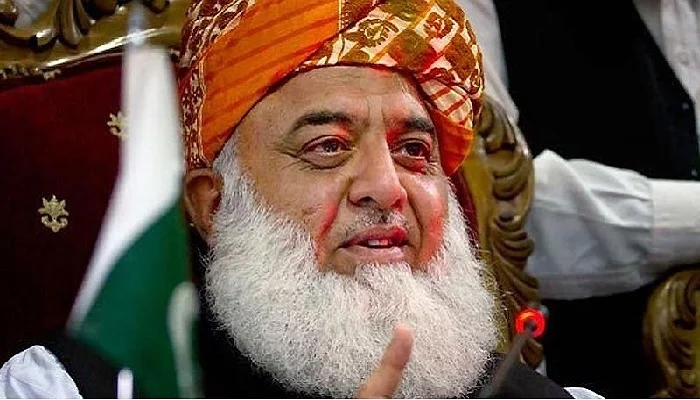
LAHORE, Sep 08 (Alliance News): Jamiat Ulema-e-Islam-Fazl (JUI-F) chief Maulana Fazlur Rehman has warned against imposing decisions on the creation of new provinces, calling for a broad political debate on Pakistan’s administrative restructuring.
Addressing a Khatm-e-Nabuwwat conference at Wahdat Road Cricket Ground in Lahore, Fazl said his party was not opposed to the creation of new administrative units in principle, but the timing and circumstances surrounding such decisions must be carefully considered.
“We are not against creating units on principle,” Fazl said, stressing that no decision should be imposed unilaterally and that the issue should be discussed through a proper debate.
He said provinces controlled mineral resources under the 18th Amendment and political parties should therefore play their role in discussions about any proposed restructuring.
Fazl criticised the country’s political and social divisions, saying Pakistan had failed to develop a strong sense of national unity. He linked ethnic divisions with unrest and violence and argued that political divisions had weakened the state.
The JUI-F chief said Pakistan could only become a strong country when its people were secure and treated with respect. He warned that the country was instead facing what he described as “division upon division”.
Fazl also criticised Pakistan’s economic dependence on foreign borrowing, saying the country had built its economic foundations around loans from international institutions.
“Colonialism has ended, but international institutions decide for our country today,” he said, referring to Pakistan’s dependence on the World Bank and International Monetary Fund.
He argued that if international lenders were determining Pakistan’s economic policies, it represented another form of colonialism.
The JUI-F chief said Pakistan belonged to its people and stressed the need to provide the poor with a dignified life. He also criticised elite and oppressive politics, saying political systems based on imposing power on people would not succeed.
Fazl further said his party would oppose any movement seeking to repeal Pakistan’s blasphemy laws.
His remarks come as political debate intensifies over whether Pakistan should create additional provinces or strengthen decentralisation through new administrative units and empowered local governments.
The restructuring debate
Interior Minister Mohsin Naqvi reignited the debate in July when he said Pakistan’s governance system had deteriorated significantly and called for fundamental reforms.
Naqvi advocated the creation of new administrative units, whether designated as provinces or under another structure, with greater powers transferred to lower levels of government. He argued that dividing provinces on administrative grounds could improve governance and speed up development.
The Pakistan Peoples Party (PPP) opposed moving ahead with the proposal, saying no concrete administrative restructuring plan had been presented to the party.
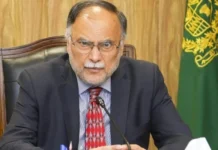
The debate widened after Planning and Development Minister Ahsan Iqbal called for a national discussion on Pakistan’s administrative structure and proposed the creation of 12 to 15 provinces.
Iqbal said an administrative reforms committee should examine possible changes and stressed that the creation of new provinces would ultimately require political consensus.
He has also argued that Pakistan’s four provinces have become overly centralised, with authority concentrated in provincial capitals despite the devolution framework introduced through the 18th Amendment.
Iqbal proposed around 160 empowered district governments, arguing that it was difficult to effectively govern Sindh from Karachi, Punjab from Lahore, Khyber Pakhtunkhwa from Peshawar and Balochistan from Quetta.
He warned that demands for new provinces could increase if meaningful powers were not devolved to districts and local governments.
The ongoing debate has therefore focused on two broad options: redrawing provincial boundaries to create new provinces or strengthening districts and local governments within the existing provincial structure.