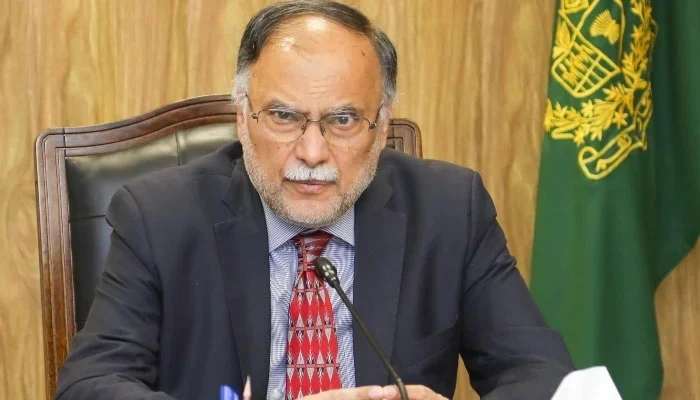
ISLAMABAD, Sep 05 (Alliance News): Planning and Development Minister Ahsan Iqbal has proposed creating 12 to 15 new provinces in Pakistan, calling for a national and political debate on the country’s administrative structure.
Iqbal urged Prime Minister Shehbaz Sharif to constitute a committee to review administrative reforms and initiate discussions on the creation of new provinces.
“I have proposed that a committee be made, on administrative reforms, through the law minister that can at least start a national and political debate on what can and cannot be done,” he told The News.
He said creating new provinces would ultimately require political consensus and added that he was waiting for Prime Minister Shehbaz Sharif to return from Kyrgyzstan before discussing the matter with him.
Iqbal argued that Pakistan’s four provinces had become increasingly centralised over the years, affecting the delivery of essential services such as health and education.
“I would say we need 12-15 new provinces,” he said, suggesting that each of the existing four provinces could be divided into three.
However, he stressed that any restructuring would need an equitable formula to ensure that changes in provincial representation, particularly in the Senate, remained balanced.
Other government officials said no formal process had yet been initiated at the federal level.
Prime Minister’s Coordinator Rana Ihsaan Afzal Khan told The News that no decision had been taken to create new provinces or administrative units.
“No such committee has been made at the federal level. There is no such talk on any forum officially,” he said.
He added that if new provinces were created, they would be established for the next election cycle.
Debate over new provinces gains momentum
Pakistan currently has four provinces, two autonomous territories and one federal capital territory. Political parties and regional groups have periodically called for the creation of additional provinces over the past several decades.
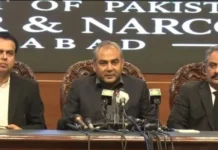
The latest debate began on July 30, when Interior Minister Mohsin Naqvi questioned the effectiveness of the country’s existing governance structure and called for new administrative units.
A day later, Inter-Services Public Relations (ISPR) Director General Lt Gen Ahmed Sharif Chaudhry also called for a serious debate on the proposal.
The suggestions have faced strong opposition in Sindh, where nationalist parties have launched demonstrations and campaigns against any attempt to divide the province.
The opposition has also come from political leaders in Punjab. Punjab Information Minister Azma Bokhari criticised the proposal, describing it as an unserious approach to a serious issue.
PPP leader Nisar Khuhro also strongly opposed any move to divide Sindh.
Governance and cost concerns
Supporters of smaller provinces argue that decentralised administrative units could bring decision-making closer to citizens and improve access to government.
However, experts say evidence on whether smaller provinces automatically improve governance remains inconclusive.
Political and sociology academic Umair Javed said smaller administrative units could provide greater access to power but warned that decentralisation without accountability could result in elite capture.
The creation of new provinces would also require significant financial and administrative resources.
Each new province would need institutions including an assembly, chief minister’s office and high court, along with government departments, bureaucratic structures and administrative infrastructure.
Pakistan’s limited fiscal space could make such restructuring financially challenging, particularly as the country continues to face debt, inflation and weak economic growth.
Redrawing the administrative map could also raise questions over the distribution of water, land, natural resources and federal funds.
Water distribution could become particularly sensitive because the four provinces have established shares under the 1991 Water Apportionment Accord.
Political implications
The debate has also raised questions about the political and institutional interests that could be affected by the creation of new provinces.
Some political activists argue that restructuring could alter the balance of political power and control over resources.
Javed said the debate could also weaken major political parties by allowing other institutions to shape the terms of discussion over administrative restructuring.
The proposals are therefore expected to remain politically sensitive, with any move towards creating new provinces requiring broad political consensus and constitutional changes.