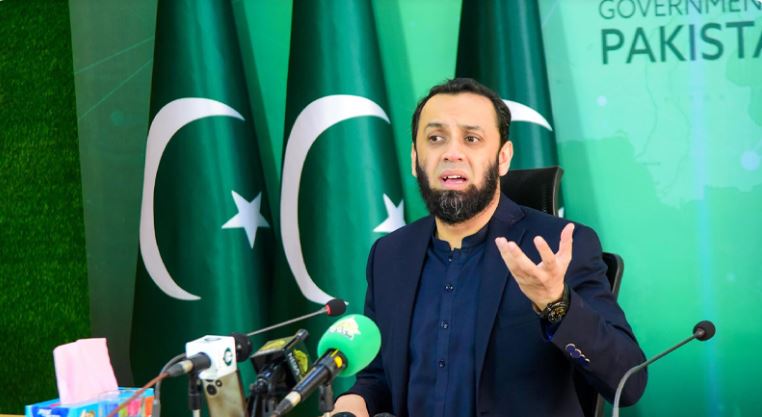
ISLAMABAD, Jun 17 (Alliance News): Federal Minister for Information and Broadcasting Attaullah Tarar has said that the federal budget for the fiscal year 2026-27 provides significant relief to the salaried class, exporters and business community, describing it as a people-friendly budget focused on economic recovery and growth.
Addressing an online briefing on the budget, the minister said the current financial plan was different from previous budgets as it was designed to provide relief to various segments of society.
He said while some critics were opposing the budget for political reasons, even opposition voices had acknowledged positive measures taken in the financial plan.
Tarar said the government had prepared a budget aimed at supporting different sectors of the economy and creating opportunities for economic growth.
He added that the government’s efforts over the past two years had helped create fiscal space to provide relief to the public.
Recalling the economic challenges faced in the past, the minister said that political opponents had repeatedly predicted Pakistan’s economic default when foreign exchange reserves were at critical levels, import financing was difficult, the exchange rate remained unstable, exporters faced challenges in opening letters of credit, and inflation had reached around 38 percent.
He said the policy rate had exceeded 22 percent and remittances had also witnessed a decline during that period. According to him, the government faced a difficult economic situation but took steps to stabilise the economy.
Tarar said under the leadership of Prime Minister Shehbaz Sharif, with the vision of Pakistan Muslim League-Nawaz leader Nawaz Sharif, the government successfully engaged with the International Monetary Fund (IMF) and avoided a potential default situation.
He said if agreements with the IMF had not been finalised, Pakistan could have faced serious economic difficulties, but continuous efforts resulted in economic stability and created room for public relief measures.
Highlighting reforms in the Federal Board of Revenue (FBR), the minister said the government introduced major reforms, ended discretionary practices and improved the tax collection system.
He said a merit-based approach had been introduced from customs operations to income tax administration.
He said the implementation of the “faceless appraisal” system at ports had removed direct interaction between importers/exporters and customs officials, making the process fully digital.
The move, he added, reduced delays and eliminated opportunities for malpractice, allowing processes that previously took weeks to be completed within days.
The minister said modern monitoring systems had also been introduced in major industries, including sugar, beverages, cement and tobacco sectors. He said cameras, barcodes and QR code systems were installed in sugar mills, which helped generate additional tax revenue of around Rs60 billion from the sector.
He added that enforcement measures against illegal trade in the tobacco sector helped reduce revenue leakage, which was estimated at around Rs200 billion. He said these efforts contributed to significant additional revenue collection.
Talking about tax dispute resolution, Tarar said new tribunals were established to resolve pending cases, enabling the government to recover substantial amounts. He added that international expertise was also being used for FBR digitalisation, with support from global institutions and technology experts.
Explaining relief measures for salaried individuals, the minister said people earning up to Rs50,000 per month would not pay income tax, while those earning between Rs50,000 and Rs100,000 would pay only one percent tax. He said tax rates had also been reduced for other income groups.
He said reducing the burden on salaried people was one of the government’s key commitments, which had been addressed through the new budget.
Regarding the housing sector, Tarar said important measures had been introduced to encourage investment and construction activities. He said taxes on buying and selling five and ten-marla houses and plots had been reduced, while Rs90 billion had been allocated for the Apna Ghar programme, with Rs11 billion already released.
He said growth in the housing sector would also support more than a dozen related industries, creating economic activity and employment opportunities.
The minister said exporters had received major incentives, including the removal of advance tax and super tax. He added that the interest rate under the export refinancing scheme had been reduced to four percent, which would help exporters expand operations and improve the competitiveness of “Made in Pakistan” products in international markets.
Speaking about youth initiatives, Tarar said significant funds had been allocated under the Prime Minister Youth Programme. He said around 550,000 young people would benefit from agricultural and business loans, while technical training programmes were being expanded.
He said sports talent programmes were also being strengthened and referred to successful athletes, including Arshad Nadeem, as examples of how youth-focused initiatives could help discover and promote talent.
The minister said all duties on the import of agricultural machinery had been removed, while special programmes for agricultural graduates and agricultural innovation schemes would continue. He added that interest rates on agricultural financing would also be reduced.
He said the government had maintained tax incentives for the IT sector, adding that freelancers would not face additional burdens and IT companies would continue receiving support.
Discussing taxation of traders, Tarar said around 3.6 million retailers were outside the tax net, therefore a fixed tax scheme had been introduced after consultation with business organisations.
Under the scheme, retailers would pay a minimum annual tax of Rs25,000 and receive certification from the FBR. He said traders’ organisations across the country were on board with the initiative, while separate proposals for the jewellery sector were also being considered.
Tarar said the budget provided relief to salaried individuals, industries, exporters and businesses. He also referred to remarks by former finance minister Miftah Ismail, saying he had acknowledged relief measures for salaried people, exporters and the business community.
The minister said Pakistan was moving towards economic stability through collective efforts of Prime Minister Shehbaz Sharif, the finance ministry, Field Marshal Syed Asim Munir, the Special Investment Facilitation Council (SIFC) and other institutions.
He said these measures were the result of teamwork and reflected the government’s efforts to create maximum relief opportunities for the people during the last two years.