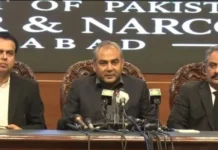
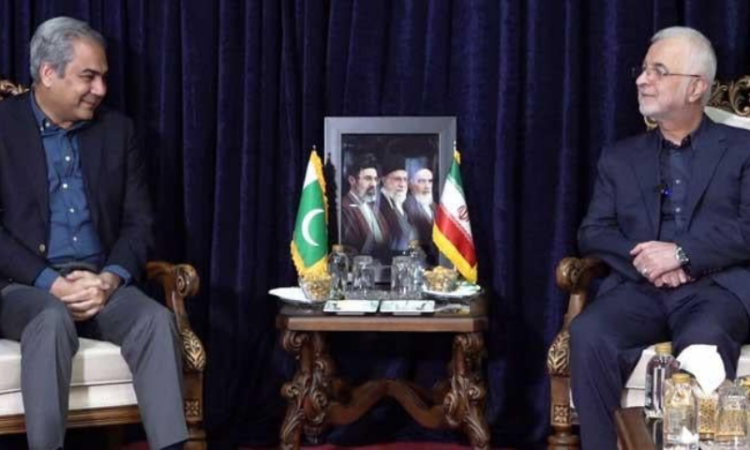
TEHRAN, May 17 (Alliance News): Pakistan’s Interior Minister Mohsin Naqvi arrived in Tehran on Saturday for high-level bilateral meetings with senior Iranian officials as regional tensions continue to intensify amid renewed confrontation and sharp rhetoric between Iran and the United States, diplomatic sources said.
The visit comes at a sensitive time for the region, with Tehran announcing plans to introduce a new mechanism for managing maritime traffic through the strategically vital Strait of Hormuz, a key global energy and trade corridor.
Head of the Iranian parliament’s national security committee, Ebrahim Azizi, said the proposed mechanism would regulate commercial shipping along designated maritime routes while offering specialised services to vessels and countries cooperating with Iran.
According to Azizi, Tehran intends to impose service charges under the new arrangement, which Iranian authorities are expected to formally unveil in the near future.
The development has attracted significant international attention due to the strategic importance of the Strait of Hormuz, through which a major share of global oil and gas supplies passes daily.
Meanwhile, Iranian Foreign Minister Abbas Araghchi issued a strong warning to Washington, stating that the United States would increasingly face economic consequences from what he described as a “war of choice” against Iran.
In a statement shared on the social media platform X, Araghchi said Americans would gradually experience the economic burden of prolonged conflict through rising debt costs, increasing mortgage rates and wider financial instability.
He stated that beyond fuel prices and stock market fluctuations, the real economic impact would become visible through rising borrowing costs and growing financial stress among American consumers.
The Iranian foreign minister also pointed to increasing auto loan delinquencies in the United States as an indication of broader economic pressure and instability.
Separately, Iranian Foreign Ministry spokesperson Esmaeil Baghaei strongly criticized Western policies, accusing Western powers of hypocrisy and contributing to growing global instability.
Referring to the writings of anti-colonial intellectual Aimé Césaire, Baghaei argued that recent conflicts had exposed deep divisions within the Western alliance and highlighted what he described as moral decline in international politics.
At the diplomatic level, Iran’s Permanent Mission to the United Nations accused Washington of attempting to create a “false image” of international consensus through what it termed a politically motivated Security Council resolution aimed at justifying further military action in the region.
The Iranian mission warned that countries supporting the US-backed resolution could also bear responsibility for enabling future escalation and instability.
Amid the heightened tensions, Iranian President Masoud Pezeshkian reiterated Tehran’s support for diplomacy and peaceful engagement in a message addressed to Pope Leo XIV.
According to Iranian state media, Pezeshkian appreciated the Pope’s position regarding recent military actions against Iran and stated that Tehran’s actions against the United States and Israel were carried out within the framework of legitimate self-defence.
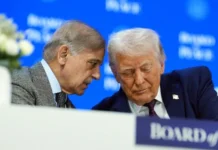
On the other hand, former US President Donald Trump said Washington retained the capability to rapidly destroy Iran’s infrastructure if necessary, while also acknowledging Iran’s resilience during the recent confrontation.
In an interview with Fox News, Trump claimed the United States could “knock everything out in two days,” including bridges and electricity infrastructure, but added that he still preferred a peaceful and non-violent resolution to the conflict.
Regional tensions have remained elevated since US and Israeli strikes on Iran earlier this year triggered retaliatory attacks by Tehran against Israeli targets and US allies in the Gulf region.
A ceasefire facilitated through Pakistani mediation came into effect on April 8, although follow-up negotiations held in Islamabad failed to secure a permanent settlement between the parties.
Trump later announced an indefinite extension of the ceasefire, while diplomatic efforts aimed at achieving long-term regional stability continue.
Analysts believe Mohsin Naqvi’s visit to Tehran reflects Pakistan’s continued diplomatic engagement with regional stakeholders during a period of heightened geopolitical uncertainty and security concerns in the Middle East.
Observers also note that Islamabad has increasingly sought to position itself as a mediator promoting dialogue and de-escalation amid rapidly evolving regional tensions.