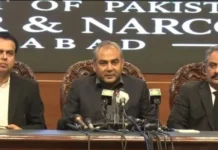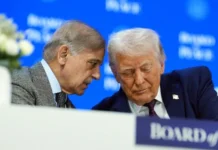
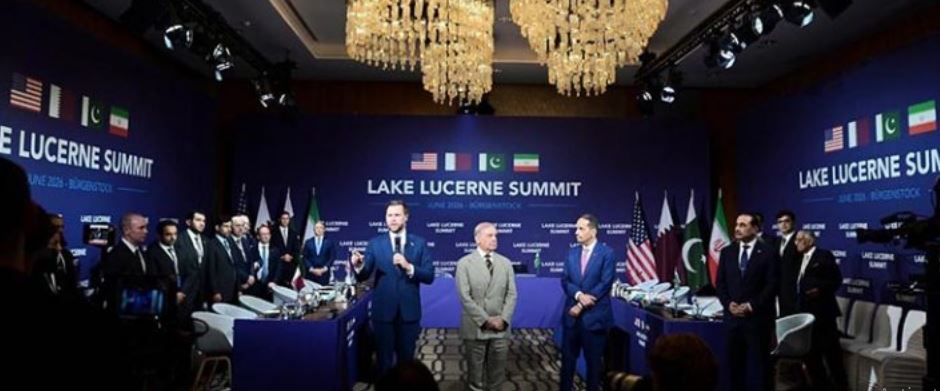
ISLAMABAD, Aug 8 (Alliance News): Pakistan’s diplomatic efforts as a third-party mediator between the United States and Iran are fundamentally grounded in the realities of conflict resolution, and any setbacks in the peace process reflect the inherent dynamics of conflict management rather than mediation failure, according to a prominent geopolitical analysis.
An article titled “Why Pakistan Should Not Be Blamed When Peace Falters,” published in the Washington-based online magazine South Asian Voices, argues that mediators are often unfairly blamed when long-term peace proves more difficult to sustain than initially expected.
The analysis refers to public criticism from figures such as the late US Senator Lindsey Graham and commentators in India and Israel.
The report states that ending wars is significantly more challenging than initiating them, and says the diplomatic initiative led by Prime Minister Shehbaz Sharif and Field Marshal Syed Asim Munir should be viewed within the established principles of international conflict management.
According to the article, the Memorandum of Understanding (MoU) facilitated by Pakistan was built on strategic timing, patience and geography.
It says Pakistan successfully utilised its unique geopolitical position between China and Iran while maintaining its long-standing strategic partnership with the United States to establish direct channels of dialogue among the parties.
The analysis compares Pakistan’s role to its historic diplomatic contribution in 1971, when it facilitated then US Secretary of State Henry Kissinger’s secret visit to China.
It notes that following improved relations with Washington after the 2025 regional conflict, Pakistan retained access to US leadership while sharing a 900-kilometre border with Iran, enabling it to play a unique mediating role.
The publication argues that Pakistan’s influence stemmed from its geography, diplomatic access and credibility with Tehran rather than financial or coercive leverage.
It describes Pakistan as the only Muslim-majority nuclear power in the region opposing Israel that had openly condemned the assassination of Iran’s Supreme Leader Ayatollah Ali Khamenei, allowing it to serve as a bridge between Washington and Tehran.
The article says Pakistan’s mediation became effective when the conflict reached what conflict resolution scholar William Zartman describes as a “mutually hurting stalemate”, creating an opportunity for meaningful negotiations after military exchanges between the United States, Israel and Iran heightened regional tensions and disrupted shipping through the Strait of Hormuz.
It further claims that a telephone conversation by Field Marshal Asim Munir with US President Donald Trump helped prevent further escalation, paving the way for a ceasefire and more than 20 hours of direct talks in Islamabad between US Vice President JD Vance and Iranian negotiators, described as the highest-level direct engagement between the two countries since 1979.
Addressing later tensions and claims that elements of the MoU had stalled, the article argues that criticism directed at Pakistan reflects a misunderstanding of third-party mediation.
It cites conflict management experts Herbert Kelman, Grace Wermenbol and Professor Mehran Kamrava, who contend that deep-rooted mistrust, historical grievances and disputes over the Strait of Hormuz—not mediation failures—remain the principal obstacles to lasting peace.
The report adds that changing political and security conditions, including domestic developments in Washington, military activities in the Red Sea and evolving regional dynamics, are factors beyond the control of any mediator.
Despite renewed tensions, the analysis concludes that neither Washington nor Tehran has abandoned the broader peace process. It maintains that the role of a mediator is not to create favourable conditions artificially but to remain a trusted and reliable facilitator whenever the parties are prepared to resume dialogue.