ISLAMABAD, May 2 (Alliance News): The federal government’s newly launched Rs3.2 trillion housing finance initiative has raised serious constitutional concerns for continuing interest-based lending despite a binding deadline to eliminate riba from Pakistan’s financial system by January 1, 2028.
Official sources said the contradiction becomes apparent when the structure and timeline of the scheme are examined in light of constitutional requirements.
The five-year programme allocates Rs321 billion in its first year to support the construction of 50,000 housing units, with a total planned outlay of Rs3.2 trillion.
However, this framework implies that fresh interest-based loans will continue to be issued beyond the 2028 deadline, potentially conflicting with the state’s legal obligations.
The issue is further compounded by the loan structure, which allows repayment over a 20-year period.
This means that even loans issued near or after the 2028 cutoff would remain subject to interest-based repayments for decades, effectively extending the system well beyond the mandated timeline for eliminating riba.
Under the scheme, borrowers will benefit from a fixed 5 percent markup for the first 10 years, followed by market-based rates.
Analysts say this approach not only maintains but potentially expands the role of conventional interest-based banking at a time when the country is required to transition towards an interest-free financial system.
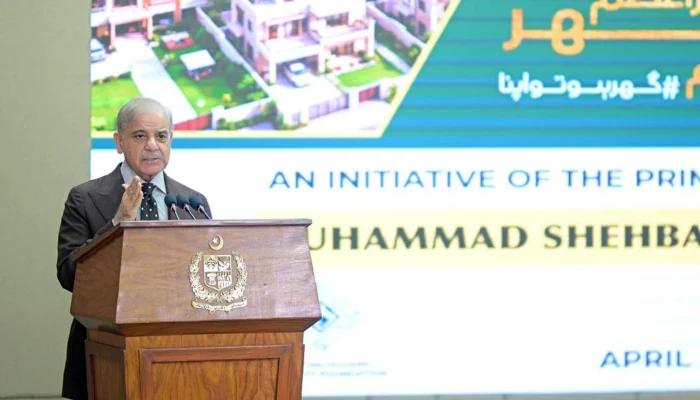
Prime Minister Shehbaz Sharif formally launched the “Apna Ghar Programme,” describing it as a “sacred obligation” aimed at enabling low-income families to build homes while stimulating economic growth.
The scheme offers loans of up to Rs10 million for housing units on plots of up to 10 marlas, with a nationwide rollout covering all provinces, as well as Azad Jammu and Kashmir and Gilgit-Baltistan.
The launch ceremony was attended by senior officials, including Ishaq Dar, along with representatives from the banking and construction sectors. The government expects the initiative to boost employment and drive activity in the construction industry.
However, policy experts warn that unless such programmes are restructured along Shariah-compliant or interest-free financing models, they could face serious legal and constitutional challenges as the 2028 deadline approaches.
Critics argue that continuing long-term interest-based lending risks undermining both the letter and spirit of constitutional provisions regarding the elimination of riba.
Attempts were made to seek comments from Information Minister Attaullah Tarrar, but no response was received at the time of filing the report.