 https://twitter.com/home https://www.facebook.com/Shabbir.Hussain191
By Shabbir Hussain
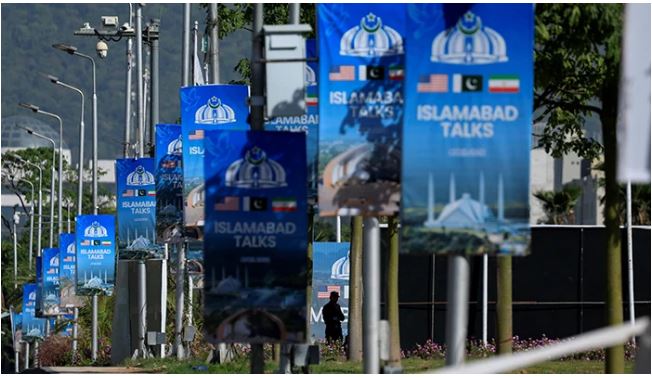
Islamabad, April 26 (Alliance News): Donald Trump has cancelled a planned visit by senior US envoys to Pakistan, dealing a fresh blow to already fragile peace efforts between Washington and Tehran, as diplomatic engagement in Islamabad ended without any major breakthrough.
The decision halted a scheduled trip by US envoys Steve Witkoff and Jared Kushner, who were expected to engage in talks aimed at easing tensions with Iran. The cancellation came shortly after Iranian Foreign Minister Abbas Araghchi departed Islamabad following meetings with Pakistani leadership, including Prime Minister Shehbaz Sharif.
Despite describing his visit as “very fruitful,” Araghchi left without any indication of progress toward resolving the ongoing conflict. Diplomatic sources suggested that key differences between Washington and Tehran remain unresolved, particularly over sanctions relief and security guarantees.
Speaking to reporters in Florida before boarding Air Force One, Trump said he called off the envoys’ visit due to logistical concerns and dissatisfaction with Iran’s latest peace proposal. He stated that while Tehran had made some improvements to its offer after the cancellation, it still fell short of US expectations.
In a post on his social media platform Truth Social, Trump also criticized Iran’s leadership, claiming there was “tremendous infighting and confusion” within the country. “Nobody knows who is in charge, including them. Also, we have all the cards, they have none,” he wrote, adding that Iran could initiate talks if it was serious about negotiations.
Meanwhile, Iran’s position remained firm. President Masoud Pezeshkian, in a telephone conversation with Prime Minister Shehbaz Sharif, reiterated that Tehran would not engage in what he described as “imposed negotiations” under pressure or blockade. According to an official Iranian statement, Pezeshkian stressed that the United States must first remove “operational obstacles,” including restrictions on Iranian ports, to create conditions conducive for dialogue.
The diplomatic deadlock comes amid heightened regional tensions. Israeli Prime Minister Benjamin Netanyahu has reportedly ordered intensified military action against Hezbollah targets in Lebanon, further straining a fragile three-week ceasefire in the region.
The broader conflict, which erupted following US-Israeli airstrikes on Iran on February 28, continues to have far-reaching implications. Iran has since retaliated with strikes targeting Israel, US military installations, and Gulf states.
The situation has significantly disrupted global energy markets, particularly after Iran restricted access to the Strait of Hormuz, a critical route for nearly one-fifth of the world’s oil and liquefied natural gas shipments.
Washington and Tehran now appear locked in a strategic impasse. While the United States continues to enforce restrictions on Iranian oil exports, Tehran has leveraged its geographic position to exert pressure on global energy supply chains.
An Iranian diplomatic source in Islamabad told Reuters that Tehran would not accept “maximalist demands” in negotiations, signaling limited flexibility in ongoing diplomatic efforts.
Earlier, White House Press Secretary Karoline Leavitt had indicated cautious optimism, noting some progress in recent days, while Vice President JD Vance remained open to traveling to Pakistan to revive talks.
Vance had previously led an initial round of discussions with Iranian officials in Islamabad earlier this month, but those talks concluded without any agreement.
The latest developments highlight the growing complexity of the conflict, as diplomatic efforts struggle to keep pace with escalating military and economic pressures, leaving prospects for a negotiated settlement increasingly uncertain.