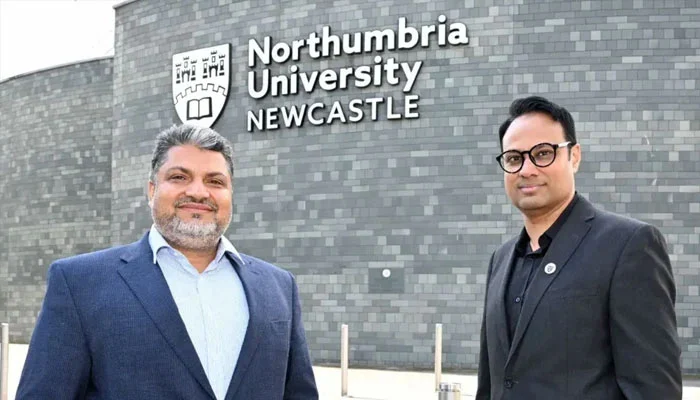
ISLAMABAD, Aug 17 (Alliance News): The UK government has awarded £1.25 million to academics at Northumbria University to develop Pakistan’s first full-scale plant converting agricultural waste into clean energy, offering a potential new solution to crop-residue burning, air pollution and rural unemployment.
The project, titled “Safer Plus,” is being led by Northumbria University’s School of Engineering, Physics and Mathematics. It will convert agricultural waste, particularly cotton stalks and sugarcane residue, into biofuel, according to the BBC.
Millions of tonnes of agricultural waste are burned across Punjab every year, contributing to air pollution and worsening seasonal smog. The new project aims to transform this waste into a commercially valuable source of cleaner energy.
The agricultural residue will be processed into bio-coal pellets through a heating technology known as torrefaction. The pellets could potentially replace imported coal currently used by industries, including brick kilns and textile mills.
Researchers say the locally produced fuel could cost 40-50% less than imported coal, potentially reducing industrial energy costs while also creating a new market for agricultural waste.
Dr Jibran Khaliq, one of the academics leading the project, said Pakistan spends more than $2.5 billion annually on coal imports to meet industrial energy requirements, while large quantities of crop residue are burned because farmers have limited opportunities to sell or utilise it.
A major feature of the initiative is its focus on women in rural Punjab, particularly communities in South Punjab.
The project will establish a women-led biomass cooperative responsible for collecting and supplying agricultural waste to the plant. Researchers said women in rural South Punjab can spend between three and six hours a day collecting fuelwood and may also work unpaid on family farms.
Under the cooperative model, more than 120 households living near the proposed facility will be able to earn formal income by supplying agricultural waste that farmers currently have to dispose of.
The project also aims to ensure that women directly benefit financially from the new agricultural value chain.
At least 60% of training places under the initiative will be reserved for women, while payments will be transferred directly into their mobile wallets. The arrangement is designed to give women greater control over their earnings and strengthen their economic participation.
The initiative also has potential implications for Pakistan’s textile industry, which remains heavily dependent on energy-intensive industrial processes.
Three Pakistani textile manufacturers have already signed letters of commitment to test the bio-coal pellets as fuel for their industrial boilers.
Researchers said the project is intended to move beyond laboratory research and establish a commercially viable facility that can eventually be replicated in other parts of Pakistan.
Dr Khaliq said the team had spent six years developing the underlying technology and was now moving towards the construction of a live commercial facility.
He said the involvement of textile manufacturers could help demonstrate the commercial viability of the technology and create a model that Pakistan could eventually own and expand.
The project could also provide an alternative approach to addressing crop-residue burning, particularly in Punjab, where seasonal agricultural burning has been linked to worsening air quality and smog.
By creating a market for agricultural waste, the initiative could provide farmers with an additional source of income while reducing the incentive to burn crop residue in fields.
The project combines clean energy, agricultural waste management, women’s economic empowerment and industrial decarbonisation, making it potentially significant for Pakistan’s energy and environmental challenges.
If successfully implemented, the model could eventually be expanded beyond cotton and sugarcane waste and replicated in other agricultural regions, creating new rural employment opportunities while reducing dependence on imported fossil fuels.
The initiative also represents a new area of UK-Pakistan cooperation in clean technology, research, climate action and sustainable development.