 https://twitter.com/home https://www.facebook.com/Shabbir.Hussain191
By Shabbir Hussain
ISLAMABAD, Jun 14 (Alliance News): Climate experts, environmental specialists, government officials, and citizens have stressed the urgent need to promote rainwater harvesting as a sustainable solution to Pakistan’s growing water crisis.
They warned that climate change, declining groundwater levels, rapid urbanization, and changing weather patterns are creating serious pressure on the country’s water resources, requiring immediate and long-term strategies for sustainable water management.
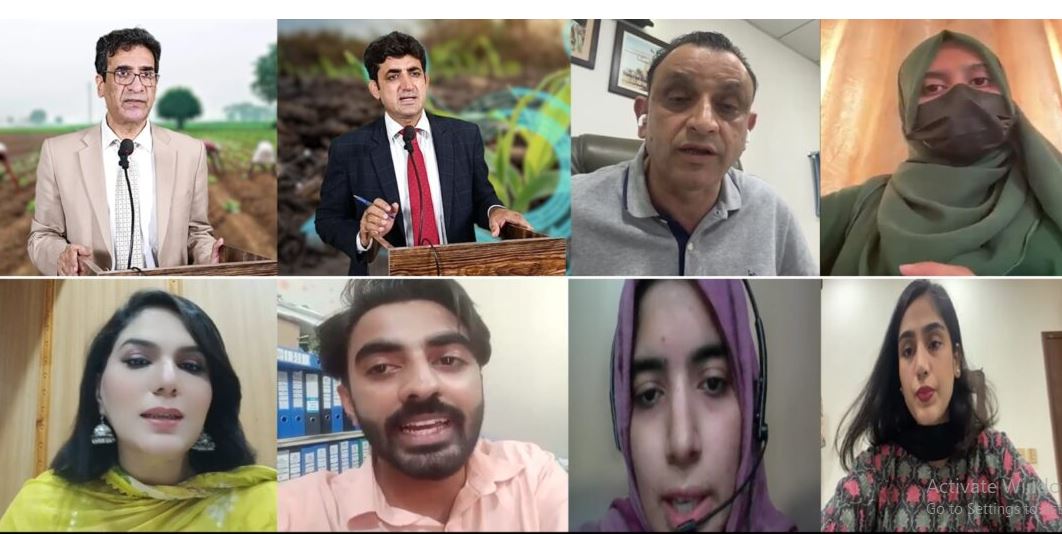
The experts expressed these views during a webinar organized by the Alliance Good Governance Foundation, where environmentalists, agricultural experts, journalists, and civil society representatives discussed climate challenges, water conservation, and the importance of adopting modern techniques for sustainable water management.
Experts warned that Pakistan is facing increasing pressure on its water resources due to climate change, population growth, expansion of urban areas, and inefficient water management systems.
They stressed that the country must shift towards climate-resilient policies by adopting innovative conservation methods and reviving traditional practices of water storage.
Economist and agricultural expert Dr. Khizar Nazir said climate change has created serious challenges for Pakistan’s agriculture, economy, and natural resources.
He emphasized that irregular rainfall patterns, rising temperatures, drought conditions, and extreme weather events are directly affecting water availability and food security.
He said Pakistan needs to focus on sustainable water management and adopt modern solutions such as rainwater harvesting to reduce pressure on existing water resources.
“Rainwater harvesting is not only a conservation method but also a practical strategy to strengthen climate resilience. The country needs to store rainfall instead of allowing this valuable resource to go to waste,” Dr. Khizar Nazir said.
Participants of the webinar highlighted that rainwater harvesting is emerging as one of the most effective and affordable approaches to improving water availability, reducing dependence on underground water reserves, and supporting communities facing water shortages.
The discussion gained importance as Pakistan continues to experience the impacts of climate change, including devastating floods, unexpected heavy rainfall, prolonged droughts, rising temperatures, and changing monsoon patterns.
Climate experts stressed that instead of allowing rainwater to flow away and create urban flooding, Pakistan should develop systems to capture, store, and reuse rainfall for domestic, agricultural, and environmental purposes.
Environmental specialists pointed out that Pakistan receives considerable rainfall in different regions, but due to limited storage facilities and weak management systems, a large amount of this valuable resource is lost every year.
They said properly designed rainwater harvesting systems can convert seasonal rainfall into a reliable water source while supporting groundwater recharge and improving local water security.
According to experts, collected rainwater can be stored in tanks, reservoirs, and underground systems or directed towards recharge wells to restore declining aquifers. This approach, they added, is particularly important for urban areas where excessive groundwater extraction has become a major concern.
Climate specialists highlighted that major cities, including Islamabad, Rawalpindi, Lahore, and Karachi, are facing increasing water pressure due to population growth, expanding housing sectors, and rapid urban development.
They noted that increasing construction of concrete buildings, roads, and commercial areas has reduced the natural absorption of rainwater into the soil. As a result, rainwater quickly flows away, increasing urban flooding risks while reducing groundwater replenishment.
Dr. Ejaz Tanvir of the Federal Flood Commission said Pakistan needs practical climate adaptation measures to deal with increasing environmental challenges.
He emphasized that water conservation should become a national priority, especially in urban areas where groundwater resources are rapidly declining.
He said rainwater harvesting can provide a sustainable mechanism for restoring underground water reserves and reducing dependency on traditional water supplies.
Dr. Ejaz Tanvir added that cities facing severe water problems must introduce scientific water management systems, including rainwater collection, storage facilities, and groundwater recharge projects.
He said proper planning and implementation can help Pakistan manage water shortages while reducing the impacts of extreme weather events.
Senior journalist Shabbir Hussain said it is the right time for Pakistan, particularly urban areas facing worsening water challenges, to adopt rainwater harvesting on a large scale.
He said dry bore wells and declining underground water levels are becoming a serious concern in many cities, and harvesting rainwater can help refill groundwater reserves.
“Rainwater harvesting can provide a practical solution for meeting water needs and reducing pressure on underground resources. Many cities around the world have adopted such systems, and Pakistan should also move in this direction,” he said.
Shabbir Hussain stressed that government institutions, housing societies, and citizens must work together to develop rainwater harvesting projects, particularly in areas where water shortages are becoming severe.
He added that using rooftops, open spaces, and public buildings for rainwater collection can significantly contribute to improving water availability.
Convener Alliance, Dr Tariq Mehmood Khan supporting the initiative of the promotion of rainwater harvesting systems, describing them as an important step towards addressing Pakistan’s climate and water challenges.
He said climate change has already affected Pakistan, exposing the country to frequent natural disasters and environmental challenges.
He highlighted that Pakistan is facing a dual climate crisis, where some regions experience destructive floods and unseasonal heavy rainfall, while others face drought conditions threatening agriculture, livelihoods, and food security.
He emphasized that Pakistan requires immediate and practical solutions to deal with environmental challenges. He said sustainable water management must become a national priority.
He stressed that alongside responsible water consumption, efforts must be accelerated to protect available water resources and restore declining groundwater levels.
He added that government institutions should take the lead in adopting environmentally responsible practices and promoting green infrastructure.
According to Dr Tariq Khan, collecting rainwater from major government buildings can contribute significantly to water conservation efforts and encourage citizens and private organizations to adopt similar measures.
Renowned environmentalist and social activist Shahdia Kausar Farooq, Chairperson of Subh-e-Nau (SN) highlighted that climate change and global warming are national challenges requiring collective efforts from government institutions and citizens.
She said Pakistan is among the countries most vulnerable to climate change, facing rising temperatures, melting glaciers, unpredictable rainfall patterns, prolonged droughts, and increasing pressure on agriculture.
Farooq stressed that environmental protection cannot depend only on government action, and citizens must also play their role by conserving water, planting trees, and adopting sustainable lifestyles.
She pointed out that Islamabad and many other parts of Pakistan are already experiencing increasing water shortages.
“Rainwater harvesting offers a practical solution to improve water availability and reduce pressure on groundwater resources,” she said.
During the question-and-answer session of the webinar, residents of Islamabad and its surrounding areas also expressed concerns over declining groundwater levels and increasing water shortages.
Citizens demanded that authorities launch comprehensive rainwater harvesting projects across the capital and adjoining areas to secure future water needs.
People living in different sectors of Islamabad and nearby communities urged the government and relevant institutions to introduce mandatory rainwater collection systems in new construction projects.
Citizens said government buildings, housing societies, educational institutions, and commercial centers should be equipped with rainwater harvesting facilities to reduce pressure on existing water resources.
They also called for projects focused on recharging underground water reserves by directing collected rainwater into recharge wells and natural aquifers.
Environmental experts concluded that rainwater harvesting should become a central part of Pakistan’s climate adaptation strategy.
They stressed that protecting water resources today is essential for ensuring environmental security and sustainable development in the future.
With increasing climate challenges and growing public demand for action, experts believe that large-scale rainwater harvesting and groundwater recharge projects can help Islamabad and other cities build a safer and more water-secure future.