 https://twitter.com/home https://www.facebook.com/Shabbir.Hussain191
By Shabbir Hussain
ISLAMABAD, Jun 11 (Alliance News): Experts, policymakers, academics, and media professionals on Thursday underscored the critical role of cultural heritage, inclusive narratives, and social cohesion in countering violent extremism in Pakistan, emphasizing that sustainable peace can only be achieved through a comprehensive approach that goes beyond traditional security measures.
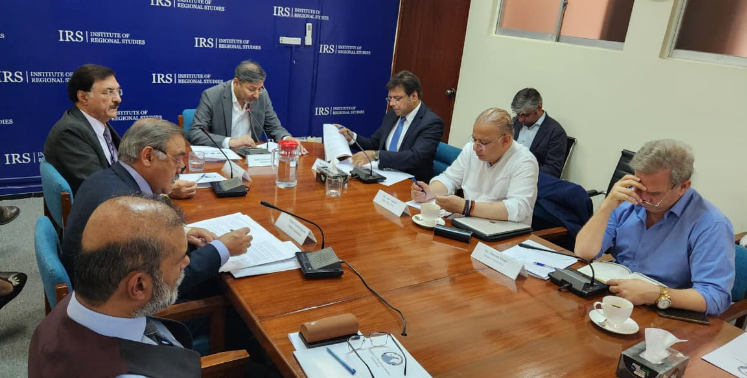
The views were expressed during a high-level seminar titled “Pluralism Over Polarization: Harnessing Cultural Heritage to Counter Violent Extremism in Pakistan,” organized by the Institute of Regional Studies (IRS), Islamabad.
The event brought together prominent experts from diverse fields to discuss how Pakistan’s rich cultural heritage and traditions of coexistence can be leveraged to address growing challenges posed by extremism and social polarization.
The seminar aimed to explore innovative and holistic approaches to preventing radicalization while promoting social harmony, tolerance, and national integration.
Speakers highlighted the importance of cultural diversity, education, economic opportunities, media engagement, and institutional reforms in building resilience against extremist ideologies.
In his opening remarks, Ambassador Jauhar Saleem, President of the Institute of Regional Studies, emphasized that cultural heritage should not be viewed merely as a reflection of the past but as a strategic national asset capable of shaping a more peaceful and inclusive future.
He said Pakistan possesses a rich and diverse cultural landscape that reflects centuries of coexistence among various ethnic, linguistic, and religious communities. This heritage, he noted, provides a strong foundation for fostering social cohesion and strengthening the country’s resilience against divisive and extremist narratives.
Ambassador Saleem stressed that pluralism remains an essential pillar of any peaceful and progressive society. According to him, embracing diversity and promoting an inclusive national identity can help create a sense of belonging among all citizens while reducing vulnerabilities that extremist groups often exploit.
He observed that Pakistan’s history contains numerous examples of tolerance, cultural exchange, and shared traditions that can serve as powerful tools in countering narratives of hatred and exclusion.
Promoting these positive aspects of national identity, he added, would not only strengthen internal harmony but also improve Pakistan’s image at the international level.
The IRS president reiterated the institute’s commitment to promoting evidence-based policy discussions and fostering constructive dialogue on critical national and regional issues.
He noted that addressing violent extremism requires sustained engagement among policymakers, academics, civil society, and media stakeholders.
Participants at the seminar generally agreed that Pakistan’s strategy for combating violent extremism should adopt a multidimensional approach.
While acknowledging the importance of security and law enforcement measures, they stressed that long-term solutions must also address social, cultural, educational, and economic factors that contribute to radicalization.
Speaking on the occasion, Ihsan Ghani, former National Coordinator of the National Counter Terrorism Authority (NACTA), highlighted what he described as an imbalance between tactical counterterrorism operations and broader counter-extremism efforts aimed at preventing radicalization before it takes root.
He pointed out that Pakistan has achieved significant success in reducing terrorist violence through military and security operations.
However, he argued that greater attention must now be directed toward addressing the ideological and social drivers of extremism.
Ghani emphasized the importance of cultural initiatives in building positive social identities and creating alternative spaces for community engagement.
He suggested that cultural festivals, community theatre productions, artistic exchanges, literary activities, and support for traditional arts can serve as effective tools for promoting social inclusion and weakening the appeal of extremist narratives.
According to him, such initiatives help individuals, particularly young people, develop a stronger sense of identity, belonging, and connection with their communities.
He called for increased investment in cultural institutions and recommended providing greater support to local artists and cultural practitioners, particularly in areas affected by conflict and instability.
He also advocated the revival of inter-provincial cultural festivals as a means of promoting national integration and strengthening understanding among different communities across Pakistan.
Addressing the seminar, Major General (Retd.) Zahid Mahmood, Principal at the National University of Sciences and Technology (NUST), identified governance challenges and institutional weaknesses as significant contributors to polarization and social fragmentation.
He observed that ineffective governance often creates public frustration and weakens trust in state institutions, creating conditions that can be exploited by extremist groups. Strengthening institutions and improving governance, he said, are therefore essential components of any long-term strategy to counter extremism.
Major General Zahid Mahmood emphasized the crucial role of educational institutions in shaping the values, identities, and worldviews of young people. Schools, colleges, and universities, he noted, are not only places of learning but also spaces where concepts of citizenship, belonging, and social responsibility are developed.
He warned that extremist recruiters frequently target youth who may be searching for purpose, identity, or a sense of belonging. To address this challenge, educational institutions must actively promote critical thinking, tolerance, and civic engagement.
The retired military officer also highlighted the growing influence of digital platforms and social media in shaping public perceptions and opinions. While acknowledging the opportunities provided by technology, he warned that online platforms can also be exploited to spread misinformation, hatred, and extremist propaganda.
He called for enhancing digital literacy among young people and empowering them to create and disseminate positive counter-narratives that promote peace, inclusion, and responsible citizenship. Encouraging youth participation in constructive online engagement, he added, can play a key role in reducing the influence of extremist messaging.
Offering a media and policy perspective, Amir Ghauri, focused on the socioeconomic dimensions of extremism.
He argued that poverty, unemployment, social exclusion, and lack of economic opportunities often create vulnerabilities that extremist groups exploit to recruit and radicalize individuals.
Ghauri stressed that efforts to counter extremism must therefore include substantial investments in economic development and social welfare. Creating jobs, expanding educational opportunities, and reducing inequalities are essential steps toward addressing the root causes of radicalization, he said.
He also emphasized the need for curriculum reforms that encourage critical thinking, tolerance, and respect for diversity. Educational content, he noted, should reflect the pluralistic nature of Pakistani society and help students develop a balanced understanding of national identity.
Furthermore, he highlighted the importance of effective oversight and regulation of educational and religious institutions to ensure that they contribute positively to social cohesion and national development.
Senior journalist Hassan Khan cautioned against simplistic explanations for polarization, describing it as a complex phenomenon shaped by a combination of historical, political, economic, social, and cultural factors.
He argued that no single factor can adequately explain the divisions that exist within societies and that policymakers must recognize the multifaceted nature of the challenge. Addressing polarization, he said, requires a nuanced and comprehensive approach that considers both structural issues and individual experiences.
Hassan Khan stressed the importance of highlighting positive stories that reflect Pakistan’s resilience, cultural richness, and traditions of coexistence. Media organizations, educational institutions, and civil society groups, he suggested, should work together to promote narratives that celebrate diversity and shared national values.
He further advocated integrating pluralistic values, mutual respect, and shared civic identity into educational curricula to help future generations develop a stronger commitment to social harmony and national unity.
The seminar was moderated by Dr. Rizwan Naseer, Senior Research Fellow and Director of the Centre for Countering Terrorism and Violent Extremism Studies (CCTVES) at the Institute of Regional Studies. He facilitated a comprehensive discussion among participants and highlighted the importance of collaborative efforts in addressing the challenges posed by extremism and polarization.
The event attracted a diverse audience, including academics, researchers, students, policymakers, media professionals, and representatives from various sectors of society. Participants engaged in extensive discussions on policy recommendations and practical strategies for promoting pluralism and strengthening social resilience.
The seminar concluded with a broad consensus that Pakistan’s efforts to combat violent extremism must be rooted in an inclusive national vision that values cultural diversity, promotes social justice, and strengthens democratic institutions.
Participants agreed that harnessing the country’s rich cultural heritage can play a transformative role in fostering unity, countering extremist ideologies, and building a more peaceful and prosperous future.