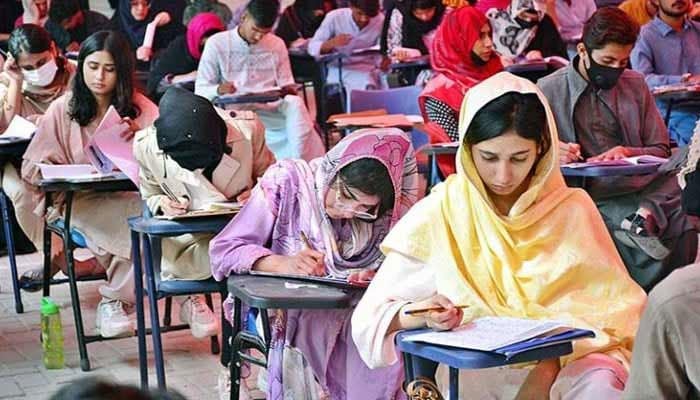
KARACHI, Jul 13 (Alliance News): The results of the admission test conducted by the NED University of Engineering and Technology have raised fresh concerns over the academic standards of several public examination boards in Sindh, with the Sindh Board of Technical Education (SBTE) recording the lowest pass rate among all participating boards.
According to the university’s admission statistics, students from foreign examination systems achieved the highest pass rate of 95.65%, followed by Cambridge candidates at 94.32%. The Aga Khan University Examination Board recorded a pass rate of 88.84%, while the Federal Board achieved 83.71%. Students from the Board of Intermediate Education Karachi (BIEK) posted a pass rate of 79.91%.
In contrast, the Sindh Board of Technical Education (SBTE) recorded the lowest success rate at just 13.95%.
Among the education boards in interior Sindh, the Hyderabad Board recorded a pass rate of 46.83%, followed by Nawabshah with 42.03%, Mirpurkhas with 40.43%, Larkana with 36.71%, and Sukkur with 35.06%.
Speaking to The News, NED University Vice Chancellor Dr Tufail said the results had highlighted serious concerns regarding the credibility of marks awarded by some examination boards.
He noted that many students who had secured between 70% and 80% marks in their first-year intermediate examinations failed to qualify in the university’s admission test, raising questions about the reliability of assessment standards.
Dr Tufail clarified that A-Level students were not included in the current results because their examinations are still in progress. Their admission test will be conducted after the completion of their examinations.
According to the university, 13,056 candidates appeared in the admission test, while 9,252 students qualified, resulting in an overall pass rate of 70.86%. Candidates are required to obtain at least 50% marks in the admission test to become eligible for admission on open merit.
Education experts say the results reflect a widening gap between marks awarded in some public board examinations and students’ actual academic competence.
They argue that when students securing high marks in intermediate examinations fail to qualify in a standard university admission test, it raises concerns about examination quality, assessment methods and academic standards.
The findings have also renewed debate over governance issues within Sindh’s examination boards. Several boards have reportedly been functioning for years without permanent chairpersons, controllers of examinations, secretaries and audit officers.
Educationists believe that the absence of stable leadership, institutional oversight and timely reforms has contributed to declining public confidence in the examination system and adversely affected the academic future of thousands of students across the province.