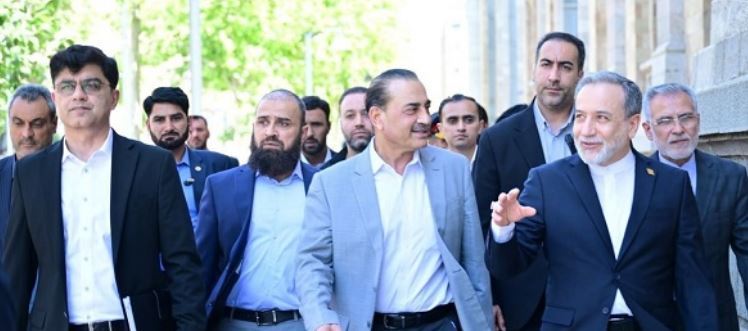
Islamabad, Aug. 9 (Alliance News): A Washington-based policy publication has acknowledged Pakistan’s pivotal diplomatic role in helping reduce tensions between the United States and Iran and bringing the two sides to the negotiating table.
In an analytical report, South Asian Voices said senior officials from the United States and Iran held direct talks in Islamabad, describing them as the highest-level face-to-face engagement between the two countries since 1979.
The report said Pakistan facilitated communication at a time when both sides had reached a critical stage of heightened tensions and mutual losses.
It noted that Pakistan’s strategic geographic location and its diplomatic ties with both Washington and Tehran uniquely positioned it to act as an effective mediator.
According to the analysis, American and Iranian representatives held more than 20 hours of negotiations in Islamabad. Pakistan’s diplomatic efforts ultimately helped pave the way for a ceasefire announcement and opened the door for direct dialogue between the two countries.
The publication described Pakistan’s mediation as a diplomatic achievement comparable to Pakistan’s role in facilitating former U.S. Secretary of State Henry Kissinger’s secret visit to China in 1971.
It added that major powers, including China, France, Germany, India and the United Kingdom, were unable to play a similarly effective mediating role.
The report stressed that the complexities of the U.S.-Iran conflict stem primarily from deep-rooted differences between the two countries rather than any shortcomings in Pakistan’s mediation. Although both sides accused each other of violating the ceasefire, the diplomatic process was not abandoned.
South Asian Voices further noted that if tensions between Washington and Tehran escalate again, both countries could once again turn to Islamabad as a venue for future negotiations.
The analysis concluded that Pakistan has emerged as an influential middle power capable of contributing to the peaceful resolution of global conflicts through its strategic location, diplomatic outreach and the trust it enjoys from both sides.