
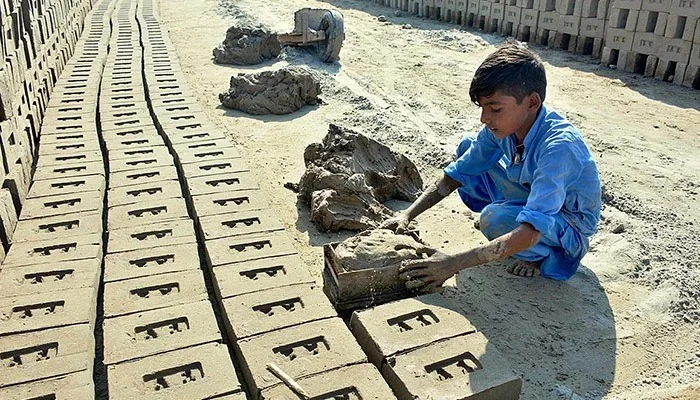
LAHORE, July 6 (Alliance News): More than 25 million children in Pakistan remain out of school despite the declaration of a National Education Emergency more than two years ago, with weak governance, inadequate funding, and poor implementation continuing to undermine efforts to ensure universal access to education, according to a new report by the Civil Services Academy (CSA).
The report states that Pakistan’s education crisis is no longer rooted in the absence of policy but in the failure to effectively implement existing reforms. It highlights weak administrative structures, fragmented governance, insufficient financing, poor data integration, and significant provincial disparities as the major obstacles to fulfilling the constitutional guarantee of free and compulsory education under Article 25-A.
According to the CSA review, between 25.1 million and 26 million school-age children are currently out of school, making Pakistan home to the world’s second-largest population of out-of-school children, based on UNICEF estimates cited in the report. Although all provinces have prepared implementation plans under the National Education Action Plan (NEAP) 2026, the report warns that the gap between planning and execution continues to widen.
Punjab has the highest number of out-of-school children, with an estimated 9.6 to 10.4 million, including 6.4 million children who have never enrolled in school and over three million who dropped out. The report estimates the province requires around 35,000 additional middle and secondary school classrooms, while poverty and child labour continue to fuel dropout rates.
Sindh faces a different challenge, with around 7.4 million out-of-school children, including 4.1 million girls. The province has more than 36,000 primary schools but only 2,634 middle schools and 1,674 secondary schools, creating a severe bottleneck that forces many students to leave education after primary level. Flood damage, poverty and social barriers further worsen the situation.
The report estimates 4.9 million children are out of school in Khyber Pakhtunkhwa due to difficult terrain, security concerns and a shortage of female teachers, particularly in merged districts. In Balochistan, where 3,617 schools are non-functional or “ghost schools,” poor infrastructure, long travel distances and a lack of basic facilities continue to prevent children—especially girls—from accessing education.
The CSA review recommends comprehensive reforms, including establishing a National Student Registry linked to NADRA’s B-Form system, integrating formal and non-formal education databases, expanding double-shift schooling, deploying more female teachers in underserved areas, introducing climate-resilient schools, and shifting to performance-based education funding.
Education experts quoted in the report stressed that poverty, disability, gender inequality, inadequate school infrastructure, and declining public investment remain the principal barriers to educational access. They called for stronger political commitment, increased education spending, improved school facilities, and targeted social protection measures to prevent children from dropping out.
The report concludes that unless Pakistan undertakes decisive reforms in governance, financing, accountability and data management, the country’s education emergency risks becoming a long-term national crisis, leaving millions of children permanently excluded from formal education despite repeated policy commitments.